Definition and Context
Interim storage is a storage or staging area that holds goods and materials temporarily before they move on to the next process step. It thus serves as a time buffer within supply chains, production processes, or distribution networks. Unlike a classic main warehouse, the focus is not on long-term stockholding but on bridging the gap between two stations, for example between goods receipt and production, between production and shipping, or between transport legs.
Interim storage arises where the timing and quantities of supply, processing, and dispatch are not fully synchronized. Typical reasons are fluctuating demand, irregular deliveries, limited handling capacities, or minimum quantities in transport and procurement. In this sense, interim storage is a functional element for stabilizing the material flow and ensuring supply to downstream areas.
It can be classified by logistics context: in production, interim storage is often used as a buffer or staging area; in distribution, it can act as a temporary node between regional warehouses, hubs, or shipping sites. Interim storage can also appear at transport hubs (e.g. around ports or airports) as an intermediate stage in international trade, for example when means of transport or routes change.
Structure, Characteristics, and Use Cases
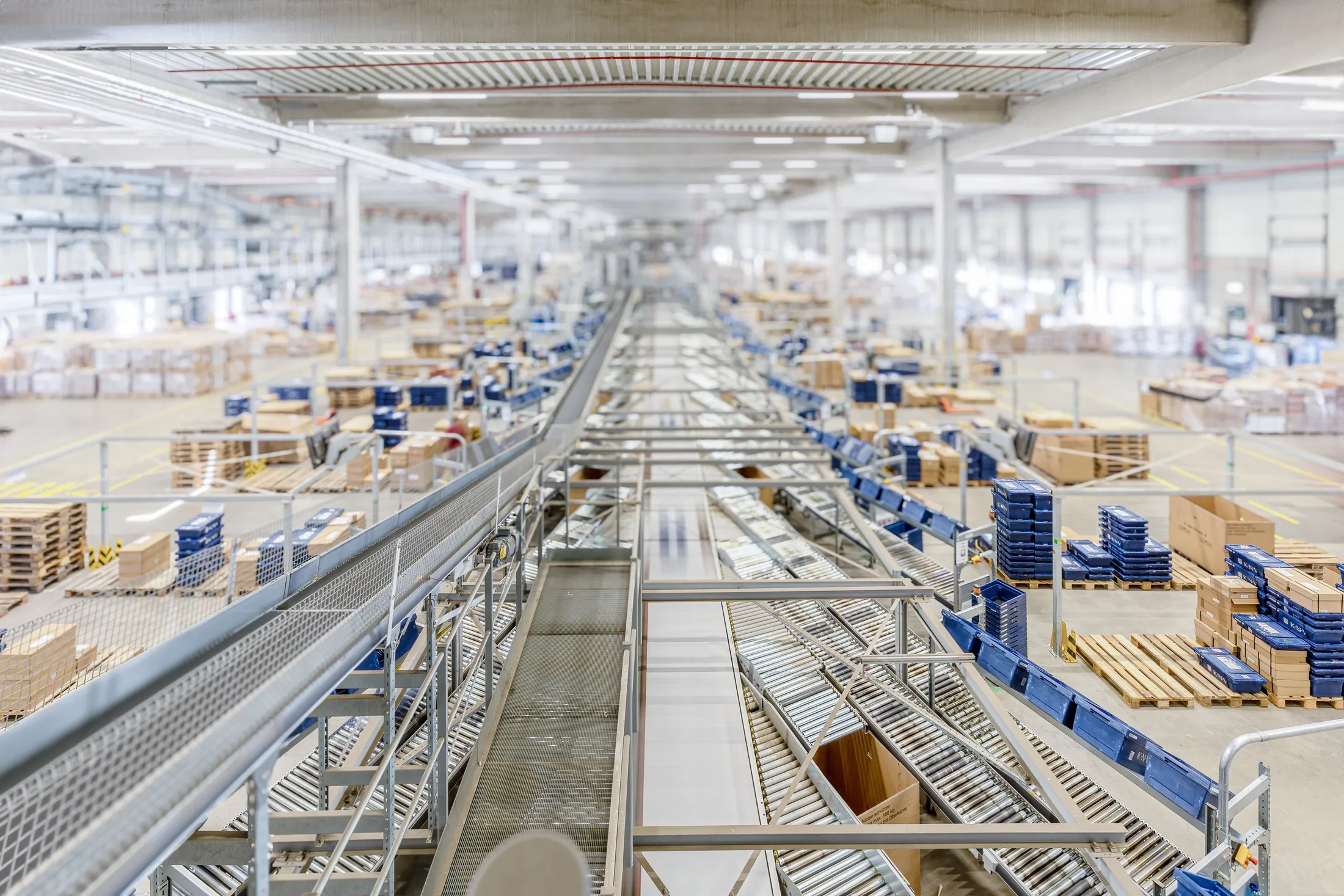
Interim storage facilities differ in design depending on their purpose, the goods, and the process environment. They can be organized as a separate storage area with defined locations (rack or block storage) or as a clearly marked zone close to workstations, conveyor systems, or loading docks. In automated environments, interim storage often takes the form of buffer lines, shuttle systems, or automated small parts warehouses that balance the material flow precisely in sync with the cycle time.
Typical characteristics include a short dwell time, a high share of movements (putaway and retrieval), and close coupling to process KPIs such as throughput, cycle times, and service levels. Depending on the system depth, inventory management can range from simple visual stock checks to complete IT-based recording. In many applications, traceability via batches, serial numbers, or best-before dates is relevant, especially for regulated goods or temperature-controlled products.
Areas of use are diverse: in manufacturing, interim storage buffers semi-finished goods between processing steps or secures material availability at production lines. In shipping logistics, picked orders are sometimes held temporarily until consolidation or until the cut-off time for the carrier. In transport and handling, interim storage serves as a collection or distribution stage, for example for bundling shipments, handing goods over to other modes of transport, or spreading out loading over time.
Importance for Logistics and E-Commerce
In logistics, interim storage plays a central role because it can absorb fluctuations in the supply chain and decouple process chains. This makes it easier to compensate for bottlenecks in individual stages, for example when deliveries arrive in bulk but downstream processing is meant to run continuously. At the same time, interim storage affects overall performance: it can stabilize throughput times and support service levels, but it also increases inventory in the system and requires space and organizational control.
In e-commerce, interim storage often occurs where shipments are consolidated, for example in sorting and handling processes. In fulfillment, too, interim storage can act as a short-term buffer zone, for example between picking, packing, and staging for shipment. When order volumes fluctuate strongly (promotions, peak periods), temporary buffer areas are used to smooth out workload peaks and meet departure windows.
The design of interim storage is closely related to targets such as on-time performance, space efficiency, inventory accuracy, and process reliability. In sensitive areas, quality and compliance requirements also play a role, for example for dangerous goods, pharmaceuticals, or food. There, interim storage is often subject to requirements for labeling, segregation, temperature, access control, or documentation.
Related and Adjacent Terms
- Buffer storage: Storage area used specifically to absorb fluctuations between process steps; often used synonymously, usually with a focus on balancing cycle times and capacity.
- Transshipment warehouse: Site or area focused on fast goods handling; storage time is short, and distribution to outbound transports takes priority.
- Staging area: Area close to the point of use (e.g. a production line) where materials are positioned for short-term use.
- Consolidation: Combining several items or partial shipments into a complete delivery or a single shipping package.
- Cross docking: Transshipment concept in which goods are transferred from goods receipt to goods issue with no or very short interim storage.
- Throughput time: Time span from when goods enter a process until they exit; interim storage typically extends it but can reduce waiting times in downstream stages.
FAQs about Interim Storage
What is the difference between interim storage and buffer storage?
The terms are often used synonymously. Interim storage generally holds goods temporarily between two process steps or transport legs, for example between the port and the destination warehouse. Buffer storage usually refers specifically to an area within a process that balances fluctuations in cycle times and capacity, for example between picking and packing. In both cases, the key is the short dwell time, unlike a main warehouse with longer-term stockholding.
When do online retailers need interim storage?
Interim storage makes sense when large delivery quantities arrive at once, such as a container from Asia, but your fulfillment warehouse is only meant to take part of it. The remaining goods then wait on pallets and are moved forward as needed. Interim storage also serves as a buffer before promotions or during peak season. Keep in mind that every additional stop adds transport, handling, and storage costs and makes inventory management across several sites more complex.
Can imported goods be stored temporarily without paying duties?
Yes, usually in a customs warehouse. There, non-Union goods can be stored without paying customs duty or import VAT until they are released for free circulation or re-exported. The duties only become due when the goods are released for free circulation. This can ease your cash flow, but it requires an authorization and precise inventory records. Get advice on this from a customs broker or freight forwarder.