Cross docking describes a logistics handling concept in which incoming goods stay at a transshipment point (e.g. a distribution center or transshipment warehouse) only briefly and are passed on to outbound transport without conventional storage. The focus isn't on stockholding but on the rapid onward distribution of shipments. Cross docking is often used as part of distribution and transport networks to shorten lead times and bundle flows of goods.
Unlike storage-driven concepts, the purpose of a cross-dock site lies primarily in coordinating material flows: goods arrive, get identified, are sorted, consolidated or de-consolidated as needed, and then routed onto outbound runs. They can be pallets, cartons, or individual packages. Cross docking is closely tied to time-aligned inbound and outbound moves, since performance depends heavily on synchronizing transports.
Different variants exist in practice. With pre-distribution, the destination is already known before arrival (e.g. via advance shipping notice and labeling), so goods can be routed straight into the matching outbound zone. With post-distribution, allocation happens at the transshipment point, for example based on current demand or route planning. Both variants pursue the same basic principle: minimizing inventory and dwell time through fast handover.
A cross-dock operation is typically laid out so that goods receipt and goods issue face each other or sit in clearly separated zones. Between them are areas for sorting, consolidation, and short-term buffering. A key feature is the short dwell time for goods, which depending on process design can range from a few minutes to several hours. Storage in the sense of longer-term inventory tracking isn't the goal of the concept.
On the process side, cross docking usually covers arrival, unloading, identification (e.g. scanning), allocation to outbound destinations, building of load units, and loading. Depending on item structure, additional activities may be involved, such as repacking, labeling, or building mixed pallets. At its core, transshipment remains the dominant activity, which is why cross docking is often used in environments with high turnover rates and clear departure windows.
Typical use cases come up wherever flows of goods need to be bundled and forwarded quickly. Common applications include store replenishment in retail, distribution of temperature-controlled goods, consolidation of groupage, and distribution of standardized items with predictable replenishment cycles. In multi-stage networks, cross docking can also serve as an intermediate step that brings together shipments from different sources for regional last-mile delivery.
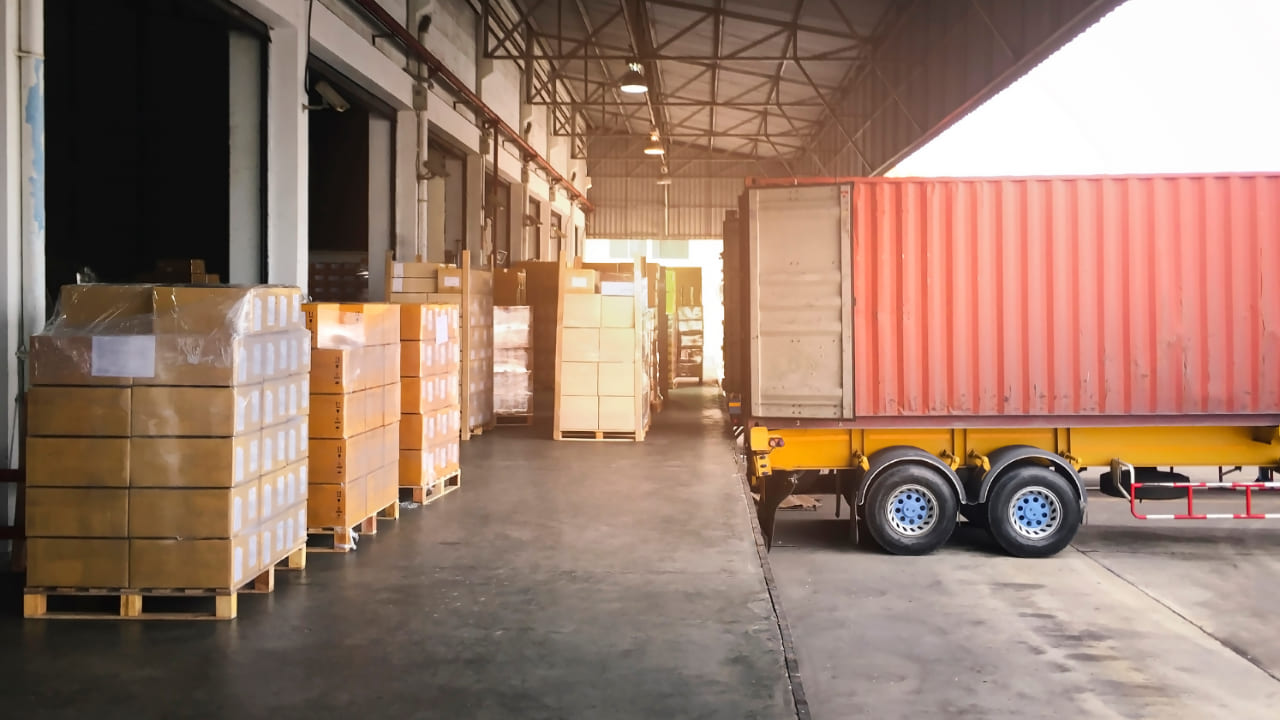
Cross docking matters in many supply chains because it redefines the role of transshipment points: instead of holding inventory, they act as pacemakers and distributors in the network. That can reduce lead times and improve transport utilization, for example by combining partial loads into fuller outbound shipments. At the same time, cross docking can help cut warehouse space requirements and tied-up capital, since less inventory is held over longer periods.
In e-commerce, cross docking is often considered alongside fulfillment and transport processes. It's particularly relevant in broad-assortment setups when incoming goods or pre-distributions need to be routed quickly to regions, carriers, or delivery networks. Depending on the business model, cross docking can also complement classic warehouses — for example when certain product groups or replenishment flows aren't stored but instead pushed straight into onward distribution. In that setup, data quality, advance shipping notices, and stable time slots become more important, since deviations directly affect downstream departures.
Operationally, cross docking is most effective when shipment data is available early and physical processes are designed for fast allocation. That includes standardized load carriers, clear gate and zone concepts, and a reliable information flow between suppliers, the transshipment point, and transport service providers. Limits show up when inbound flows fluctuate strongly, when there's a high variant mix without proper labeling, or when complex quality checks are needed. In those cases, a storage-based model or a hybrid approach can make more sense, with only part of the flow running through cross docking.
Discover a variety of technical terms and in-depth explanations in our Zenfulfillment logistics lexicon.
Regardless of whether you are looking for the basic definitions of familiar terms or are interested in detailed explanations of complex topics — our logistics lexicon provides you with comprehensive information to help you To better understand the world of logistics and e-commerce.
Be inspired by practical examples, learn about new trends and discover helpful tips that will help you to continuously expand your knowledge in the logistics industry and stay up to date.


