AutoStore refers to an automated storage and retrieval system (AS/RS) designed specifically for storing and picking small parts in standardized bins. What makes it distinctive is its compact grid-based layout — the grid — where bins are stacked on top of each other. Autonomous robots move across the top of the grid, lift bins through vertical shafts, and transport them to workstations. Unlike classic conveyor systems, goods aren't continuously „pushed“ through the warehouse; instead, they're brought out of stock on demand.
In logistics terms, AutoStore is one of the compact, highly automated solutions for goods-to-person processes: the goods come to the station rather than people walking down aisles. The system is often used in environments with many SKUs and small, frequently changing order profiles. It's typically integrated into a higher-level IT landscape including a warehouse management system (WMS) and/or warehouse control system (WCS) that prioritize orders, trigger replenishment, and steer material flows.
AutoStore is often described as a „cube storage“ principle because it uses warehouse space three-dimensionally. The high density comes from removing classic aisle structures in the warehouse core. At the same time, picking stays organized through defined ports (workstations) where bins arrive, get opened, and items are picked or stored.
The structural core of an AutoStore system is the grid as the static storage body, the bins as standardized load carriers, and a fleet of robots that travel on rails above the grid. To retrieve a bin, robots may need to first restack upper bins to reach lower ones. This principle affects performance depending on utilization, item distribution, and replenishment strategy. The system is rounded out with ports (e.g., putaway or picking stations), operating and safety components, and the control software.
Typical features include:
You'll mostly find AutoStore in industries with high order frequency and small-parts assortments. That includes e-commerce, spare parts and service logistics, electronics, pharma and healthcare, and retail/omnichannel setups. Production environments can also use AutoStore as a buffer or supply system for assembly and pack processes when material consists of many small components. Limits typically appear with very large, heavy, or bulky items that don't fit the bin logic, and with assortments that are strongly pallet-oriented and better handled through classic pallet warehouses or shuttle systems.
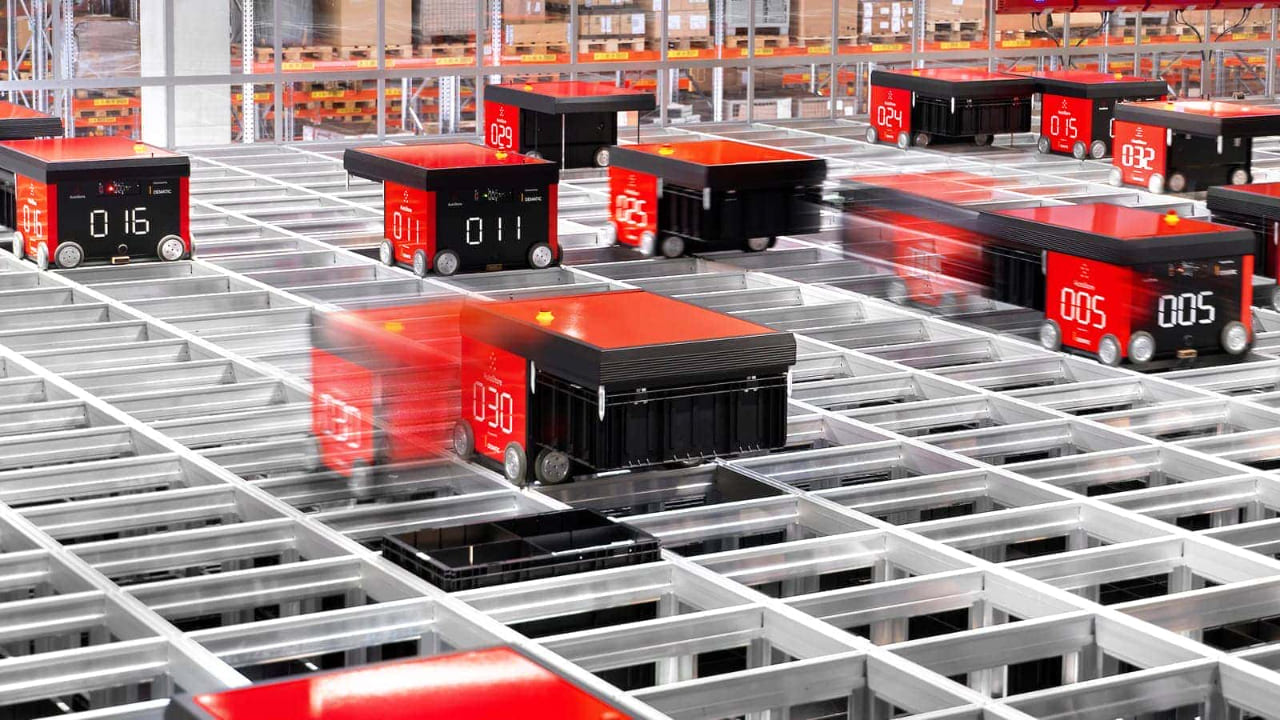
For logistics and e-commerce, AutoStore matters most where throughput, space efficiency, and quick stock access need to come together. The compact storage core can significantly increase warehouse capacity per square meter compared to aisle-based shelving. At the same time, the focus shifts away from walk paths and manual searching to stationary workstations that process orders sequentially. That supports predictable workforce planning, especially when daily volumes fluctuate.
Operationally, the system affects several process areas: goods receipt and putaway typically run through defined ports, picking happens at stations with bins delivered to them, and returns can re-enter stock through the same bin logic. Depending on the setup, packing and shipping prep are also placed close to the ports to minimize moves and intermediate buffers. The control logic (WMS/WCS) plays a key role here because prioritization, order release, bin allocation, and replenishment strategies largely determine how evenly the system is utilized.
Strategically, AutoStore is often seen as a building block for scaling and standardization: capacity and throughput can be increased within an existing layout by adding robots or ports, while expanding the grid depends more on building geometry. In practice, technical and organizational conditions also matter — how you manage item master data, bin assignments, stocktake methods (e.g., cycle counts), and how you safeguard availability through maintenance and spare parts concepts. Overall economics depend less on a single parameter than on the fit between assortment structure, order profile, service-level requirements, and planned operating hours.
AS/RS (Automated Storage and Retrieval System): umbrella term for automated storage and retrieval systems, of which AutoStore is one specific implementation.
Goods-to-person: picking principle where goods are brought automatically to a station, instead of people walking to the storage location.
Grid: grid-style storage structure where bins are stacked; forms the physical core of the AutoStore system.
Bin: standardized load carrier within the system, used to store items and transport them to the station.
Port (workstation): handover point where bins are presented for putaway, retrieval, or processing.
WMS/WCS: IT systems for managing and controlling warehouse processes; the WMS organizes inventory and orders, while the WCS steers material flows and automation components.
Shuttle system: automated rack system with vehicle-based shuttles on rack levels; a common alternative for different item and load-carrier profiles.
Discover a variety of technical terms and in-depth explanations in our Zenfulfillment logistics lexicon.
Regardless of whether you are looking for the basic definitions of familiar terms or are interested in detailed explanations of complex topics — our logistics lexicon provides you with comprehensive information to help you To better understand the world of logistics and e-commerce.
Be inspired by practical examples, learn about new trends and discover helpful tips that will help you to continuously expand your knowledge in the logistics industry and stay up to date.


