A barcode is a standardized, machine-readable representation of characters and numbers used to uniquely identify objects. In practice, it allows information to be captured quickly and with fewer errors, without manual data entry. Barcodes are therefore a core tool for automating goods and information flows.
Generally, you can distinguish between 1D barcodes (linear bar codes) and 2D codes. 1D barcodes encode information through different bar and gap widths along a line. 2D codes (e.g. DataMatrix or QR Code) distribute data across an area and can typically store more characters in a smaller footprint. In logistics and shipping, both forms are used, depending on requirements around data volume, space, and read reliability.
In many applications, a barcode isn't the “content” itself — it's a key that points to information in an IT system. The code often references records in inventory management, warehouse management, or shipping software — for example article master data, order data, or shipment events. That makes the barcode the connector between the physical world (item, package, load unit) and digital process data.
The structure of a barcode follows defined rules per standard. These include start and stop characters, check digits, and defined character sets. This standardization makes it possible for barcodes to be read across vendors and systems, as long as scanners and software support the relevant symbology. A common feature is the check digit, which detects input or print errors and improves data quality.
Key properties in operational use are readability, contrast, print quality, and label durability against abrasion, moisture, or temperature. Placement also matters: round or highly reflective surfaces can make scanning harder. In logistics, barcodes are therefore often printed on labels with defined minimum sizes, quiet zones (free space around the code), and suitable materials.
Typical use cases for barcodes in logistics and shipping are broad. They range from identifying single items to controlling entire transport chains. Common application areas are:
Different processes use different barcode standards — for example for retail item identification or for shipment tracking in parcel networks. What matters is that the code is integrated into the relevant system of scanner hardware, printing setup, label layout, and data model, and that it provides the required uniqueness.
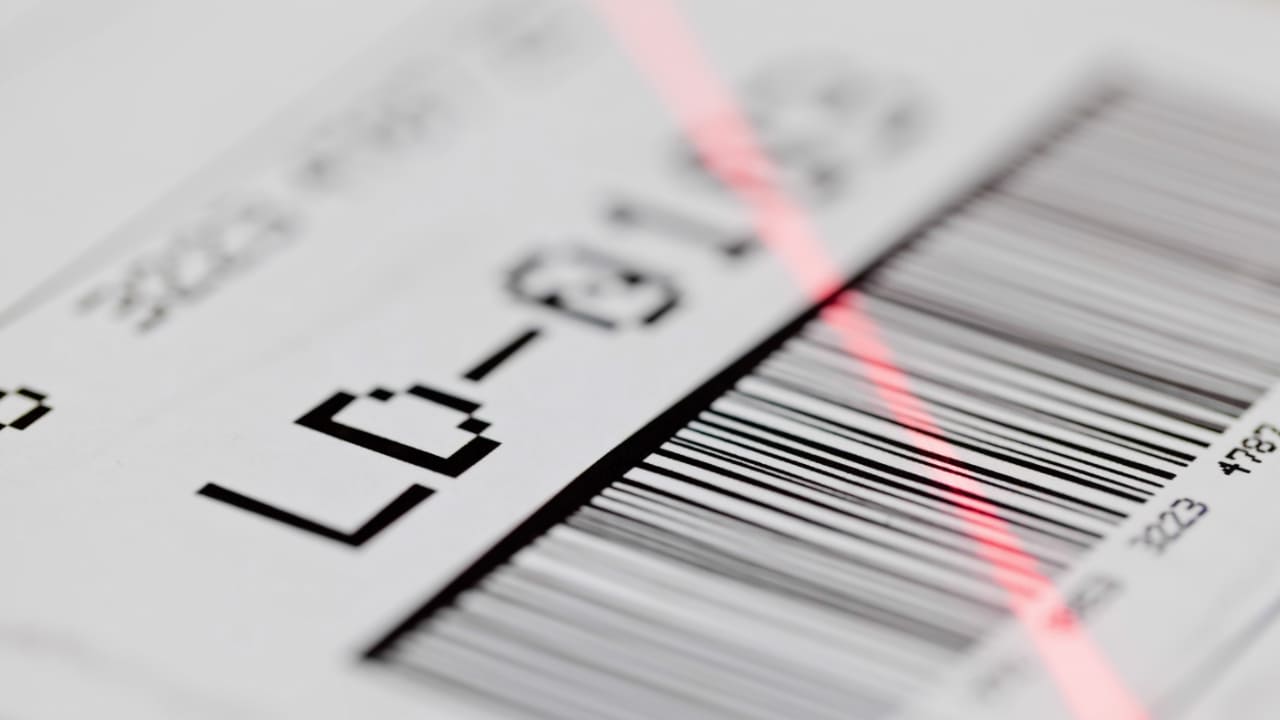
In logistics and E-Commerce, barcodes are a foundational building block for end-to-end visibility and traceability. They enable fast capture of status changes along the process chain — from goods receipt through picking to handover to the carrier. Each scan typically generates an event in the IT system, which forms the basis for inventory updates, quality checks, or tracking information.
A core benefit lies in reducing errors compared to manual data entry. That covers item mix-ups, wrong quantities, or mismatched parcel-to-order assignments. At the same time, process speed goes up, since capture and system update happen in a fraction of a second. In highly automated environments, barcodes also complement other identification technologies — for example in conveyors, sorters, or pack lines, where scans are used to control diverters, target chutes, or shipping methods.
In E-Commerce, barcodes indirectly affect key performance metrics like pick and pack productivity, error rates, returns processing, and reliability of shipping status updates. The actual impact depends on process design: a barcode only works if data is cleanly maintained, labels are printed consistently, and scan points are placed sensibly in the flow. The choice between 1D and 2D codes also matters — for example when small spaces need to encode extra information like serial numbers, expiration dates, or internal references.
EAN/GTIN: Standardized article numbers for unique identification of retail items; often shown as EAN-13 or EAN-8 in a barcode.
Code 128: Linear barcode symbology with high data density; widely used in logistics labels and internal labeling.
QR Code: Two-dimensional code that can store more data and is often used for links or compact information packets.
DataMatrix: 2D code used especially in industry and traceability, e.g. for serial numbers or small components.
Barcode scanner: Reading device for optical capture of barcodes; available as handheld, stationary, or camera-based system depending on use case.
Label: Carrier medium for the barcode and human-readable information; material and adhesive affect durability and scan quality.
WMS (Warehouse Management System): Warehouse management system that uses barcodes for control and documentation of warehouse processes.
Shipment number: Unique identifier for a shipment, often printed as a barcode on shipping labels and scanned along the transport chain.
Discover a variety of technical terms and in-depth explanations in our Zenfulfillment logistics lexicon.
Regardless of whether you are looking for the basic definitions of familiar terms or are interested in detailed explanations of complex topics — our logistics lexicon provides you with comprehensive information to help you To better understand the world of logistics and e-commerce.
Be inspired by practical examples, learn about new trends and discover helpful tips that will help you to continuously expand your knowledge in the logistics industry and stay up to date.


