
The customs tariff number (also called commodity number) is a numerical classification number that uniquely places goods in international trade into a system of product groups. It serves customs authorities and businesses as a shared language for determining how a product should be treated for customs and foreign trade purposes. At its core, the customs tariff number answers the question of what good is involved — independent of brand name, item description, or internal product numbers.
Classification is based on the globally used Harmonized System (HS), which organizes product groups into chapters, headings, and subheadings. Building on this, economic regions and countries use additional digits for further differentiation. In the European Union, the HS digits are extended by the Combined Nomenclature (CN); for specific customs purposes, additional subdivisions apply (e.g. TARIC subheadings). This makes the same type of good globally comparable while regional requirements (duties, measures, statistics) can be reflected more precisely.
Legally, the customs tariff number is part of the customs classification of goods. It is used, among other things, in customs declarations, foreign trade statistical reports, and accompanying commercial documents. Providing it correctly is essential because many downstream decisions — from duty rates to licensing obligations — are tied directly to the classification number.
The customs tariff number is hierarchical. The more digits, the higher the level of detail: from broad product groups (e.g. chapters) to specific characteristics (e.g. material, processing, intended use). A typical distinction is made between global HS digits and regional extensions. In the EU, an 8-digit CN commodity number is commonly used; for customs measures, an additional TARIC code may also be relevant.
Key features of the customs tariff number come from the criteria used to classify goods. These include, for example, the objective character of the good, its material composition, degree of processing, technical functions, or main intended use. What matters is that classification follows systematic rules rather than freely chosen product descriptions. For composite goods, sets, or machines with multiple functions, special classification logics apply to ensure a uniform assignment.
Use cases appear wherever goods cross borders or are processed in a customs-relevant way. In practice, this includes import and export clearance, calculating customs duties and import taxes, checking trade policy measures (e.g. anti-dumping), applying prohibitions and restrictions, and foreign trade statistics. The customs tariff number also plays a central role in master data management, supporting correct declarations in IT systems, consistent documents, and audit traceability.
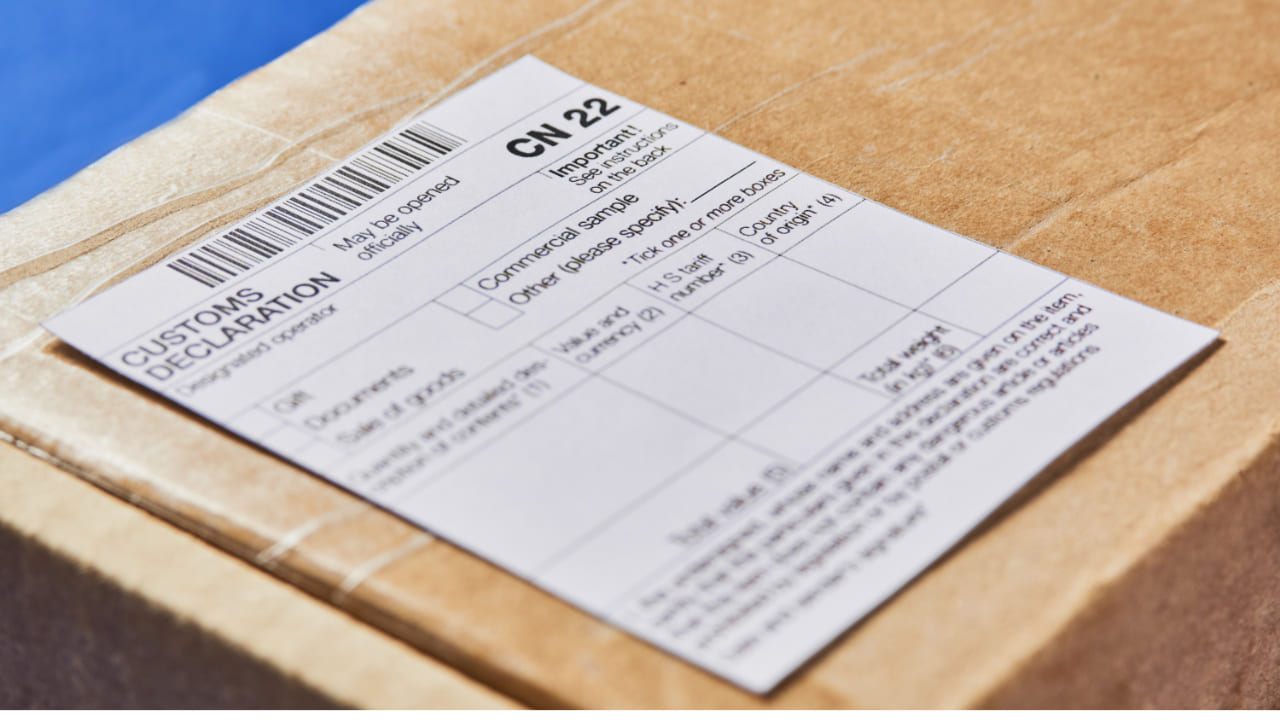
In logistics processes, the customs tariff number acts as a connecting element between product description, documentation, and official processing. It influences how shipments are assessed by customs and which details must appear consistently in customs declarations and accompanying papers. Accurate classification helps clearance run predictably and avoids after-the-fact corrections, queries, or delays.
For cross-border shipping in E-Commerce, the customs tariff number is especially relevant because a large number of heterogeneous items are regularly exported or imported in small shipments. Correct classification affects the calculation of duties, the choice of suitable customs procedures, and the review of regulatory requirements. Particularly with frequently changing assortments, bundle offers, or product variants (e.g. different materials, performance values, sizes), classification can become complex, since small product features can lead to different numbers and therefore to different customs consequences.
The customs tariff number also matters for data quality in the supply chain. It is often kept as a master data field in ERP, PIM, and shipping solutions and carried over to documents such as commercial invoices or export accompanying documents. Discrepancies between systems, inconsistent number statuses, or vague product descriptions increase the risk of misclassification. Supplier data also plays a role: even if tariff numbers are taken over from upstream suppliers, responsibility for the correct entry generally remains with the declarant or the responsible economic operator.
Finally, the customs tariff number is a building block for compliance and cost control. It not only sets the basis for duty rates and possible preferential treatment, but also triggers additional measures like excise taxes, import bans, licensing obligations, or product regulations. That makes it a relevant parameter both for operational workflows (clearance, lead times, documents) and for strategic decisions (supplier choice, sourcing, pricing, risk).
Discover a variety of technical terms and in-depth explanations in our Zenfulfillment logistics lexicon.
Regardless of whether you are looking for the basic definitions of familiar terms or are interested in detailed explanations of complex topics — our logistics lexicon provides you with comprehensive information to help you To better understand the world of logistics and e-commerce.
Be inspired by practical examples, learn about new trends and discover helpful tips that will help you to continuously expand your knowledge in the logistics industry and stay up to date.


