
The term dangerous goods transport describes the movement of substances and articles that, due to their chemical or physical properties, can pose risks to people, animals, the environment, or property. Examples include flammable liquids, gases, corrosive substances, lithium batteries, certain chemicals, paints, or aerosols. The defining feature: these shipments are not treated like standard goods but follow a clearly defined regulatory framework that sets safety requirements across the entire transport chain.
Classification as dangerous goods follows a standardized scheme. Items are typically assigned to a hazard class (e.g., flammable, toxic, oxidizing) and a UN number that uniquely identifies the substance or article. Packing groups and additional classification features layer on top to capture the level of risk. From this, transportability, permitted packaging, labeling, and any restrictions (such as quantity limits or transport bans) get derived.
Dangerous goods transport is also regulated by mode of transport. Road freight has its own rules, while sea and air freight each have their own international frameworks. Despite differences in detail, these systems share a common goal: making risks predictable and minimizing them through standardized requirements for packaging, labeling, documentation, and handling.
Dangerous goods transport needs to be set apart from related concepts. Dangerous goods is the transport-law perspective: what matters is whether a product is classified as dangerous under transport regulations. That is distinct from hazardous substances in the sense of occupational and chemical safety law, where handling, storage, and worker protection are the focus. A substance can be both a hazardous substance and a dangerous good — but does not have to be; classification follows different legal areas and criteria.
Distinction from "sensitive goods" also matters. Products like temperature-sensitive food or high-value electronics need special care but do not automatically count as dangerous goods. Dangerous goods transport, by contrast, is shaped by mandatory safety and information standards designed to make the risks clearly identifiable.
Typical features of dangerous goods transport include standardized packaging requirements (e.g., approved dangerous goods packaging), clearly regulated labeling on packages and transport units, and shipping documentation with substance data and handling instructions. Depending on the mode of transport, additional elements come into play — special loading and segregation rules, quantity limits, or load securing requirements.
Use cases span many industries. The chemical industry moves raw materials, intermediates, and waste. In the automotive and electronics supply chain, lithium batteries, airbag and seat-belt-tensioner components, and certain adhesives play a role. In retail, dangerous goods often show up as paints, cleaning agents, sprays, perfumes, or certain cosmetic products. Healthcare and lab settings can also involve transport of classified substances, e.g., disinfectants or diagnostic samples, as long as transport-law criteria are met.
A key takeaway: dangerous goods are not just a product topic — they are a process and information system. From correct classification through suitable packaging and labeling to handover to service providers and controlled delivery, safety hinges on consistent data and traceable responsibilities.
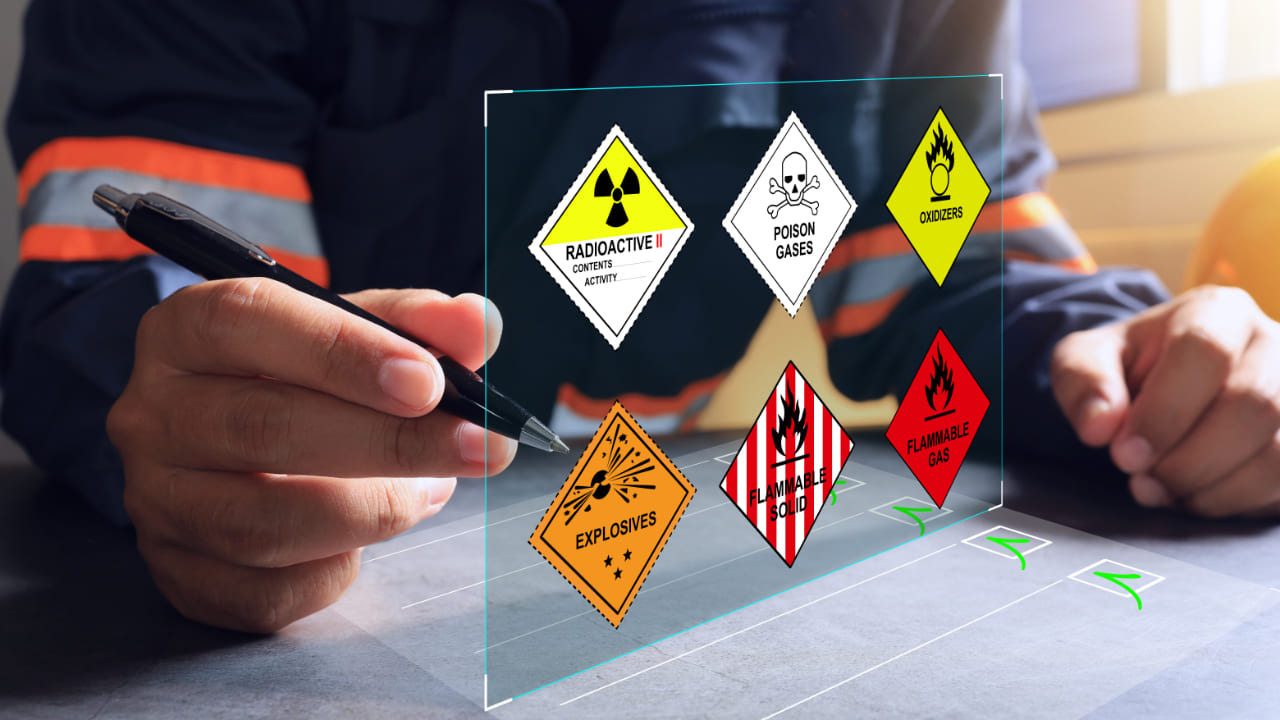
In day-to-day logistics, dangerous goods transport shapes process design, cost structures, and service promises. Dangerous goods can come with limited transport options — for example, in the choice of transport mode or specific lanes. In some networks, dangerous goods shipments are only allowed via defined hubs or face additional acceptance and inspection processes. That changes throughput times, cut-offs, and predictability compared to standard goods.
For e-commerce and omnichannel setups, dangerous goods transport is especially relevant because many consumer goods can contain dangerous goods components without it being obvious in an end-customer context. Aerosols, paint pens, nail polish remover, batteries, or cleaning agents need correct classification and shipping handling. That ripples into assortment design, warehousing, and shippability — separate storage zones, specific packaging processes, or careful selection of suitable carrier services.
In industrial supply chains, dangerous goods transport is often closely tied to production and disposal logistics. Reliable master data (e.g., UN number, official designation, packing group) and consistent documentation are critical to avoid gaps and meet audit and regulatory requirements. Cooperation between shipper, freight forwarder, warehouse operator, and recipient also matters, since interface errors (wrong labeling, incomplete paperwork, unsuitable packaging) can lead to delays, returns, or safety incidents.
Across the board, dangerous goods transport makes risks in the goods flow transparent. Consistent dangerous-goods communication supports safe handling at transfer, storage, and transport — and in case of an incident helps responders or terminal and depot operators quickly classify the risk.
Discover a variety of technical terms and in-depth explanations in our Zenfulfillment logistics lexicon.
Regardless of whether you are looking for the basic definitions of familiar terms or are interested in detailed explanations of complex topics — our logistics lexicon provides you with comprehensive information to help you To better understand the world of logistics and e-commerce.
Be inspired by practical examples, learn about new trends and discover helpful tips that will help you to continuously expand your knowledge in the logistics industry and stay up to date.


