
ERP systems (Enterprise Resource Planning) are integrated software systems for planning and controlling central business resources and processes. The goal is to bring together information from different areas in a shared data foundation and to map workflows through standardized functions. Typical ERP processes cover purchasing, materials management, inventory tracking, production, sales, finance, and HR, among others. Unlike isolated point solutions, ERP systems provide an overarching framework in which data is consistently maintained and processed end-to-end.
Functionally, ERP systems are usually based on modular building blocks that are combined depending on company size and industry. A central feature is their end-to-end character: a process such as a customer order can, for example, be mapped from order entry through availability checks and picking to invoicing in a continuous system flow. This reduces duplicate entry, increases transparency, and keeps operational metrics (e.g., inventory, delivery dates, open positions) running on uniform logic.
ERP systems are deployed as on-premises solutions (operated in a company's own data center), as cloud ERP, or in hybrid models. The choice of deployment model affects update cycles, integration effort, security concepts, and scalability. Regardless, interfaces (APIs, EDI, file formats) for data exchange with specialized systems and external partners are an important component, for example with shipping carriers, marketplaces, or financial systems.
In the logistics context, an ERP system often acts as the leading system for master data, documents, and financial mapping. It manages, for example, item master data, supplier and customer data, pricing and conditions logic, and accounting information. In day-to-day logistics, it controls processes like procurement, goods receipt, inventory tracking, and shipping fulfillment, at least at the document level, and serves as the starting point for planning and control decisions.
In many companies, the ERP system works alongside specialized logistics systems. A WMS (Warehouse Management System) takes over fine-grained warehouse logic such as path optimization, random storage, or mobile scans, while the ERP ensures overarching inventory and order management. The same is true for TMS (Transport Management System) or shipping software, which can map rate calculations, label generation, and carrier communication in fine detail, while the ERP handles shipping documents, delivery notes, and cost-center allocation.
Key features of ERP systems in the logistics environment are data consistency, process standardization, and traceability. Centralized data storage means inventory, reservations, and availability are presented uniformly system-wide. At the same time, standardization brings limits: highly specific warehouse or shipping processes can sometimes only be covered economically through add-on modules, extensions, or coupling with specialist systems. In practice, this typically results in a combination of ERP as the core system and connected specialist solutions for warehousing, transport, shipping, and trade.
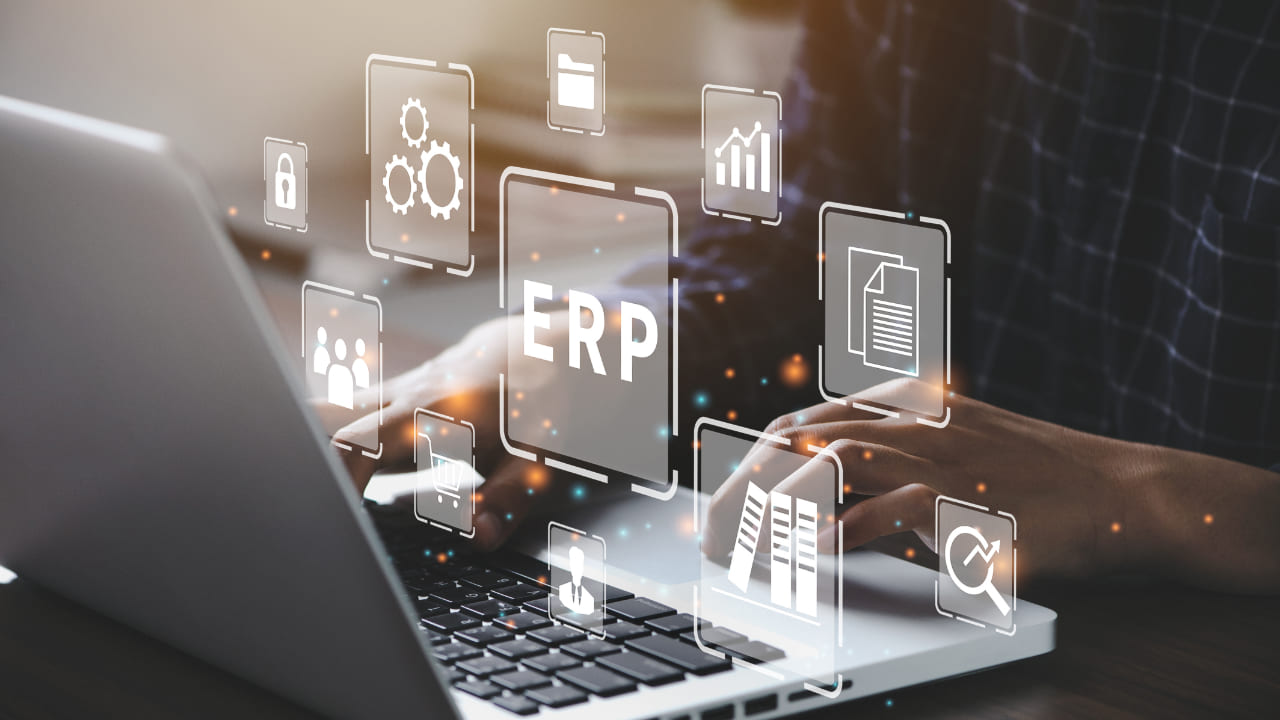
ERP systems are relevant for both operational workflows and strategic control. Operationally, they support the daily handling of orders, deliveries, goods receipts, and invoices through standardized document flows. Process steps are documented, and status information (e.g., "picked," "shipped," "invoiced") is updated in the system. This status logic is central to internal coordination between sales, warehouse, shipping, and accounting, while also serving as the basis for analytics.
Strategically, ERP systems provide a consolidated data foundation for planning, controlling, and compliance. This includes evaluations of inventory turnover, delivery performance, capital tied up in stock, or process costs. Topics like rights and roles concepts, audit trails, document archiving, and compliance with legal requirements (e.g., commercial and tax documentation obligations) are also often organized or connected within the ERP environment. Particularly in growing logistics and e-commerce environments, the ability to standardize and scale processes is a key reason for introducing or consolidating an ERP system.
For integration with shipping and trade systems, master data quality and interface capability play a decisive role. Incomplete or inconsistent item, packaging, or address data can produce downstream errors, for example in shipping label creation, customs documents, or inventory reconciliation across multiple warehouses. The ERP is therefore often defined as the "single source of truth" for central data, while operational details are created in connected systems and reported back (e.g., tracking numbers, actual shipping costs, batch information).
Discover a variety of technical terms and in-depth explanations in our Zenfulfillment logistics lexicon.
Regardless of whether you are looking for the basic definitions of familiar terms or are interested in detailed explanations of complex topics — our logistics lexicon provides you with comprehensive information to help you To better understand the world of logistics and e-commerce.
Be inspired by practical examples, learn about new trends and discover helpful tips that will help you to continuously expand your knowledge in the logistics industry and stay up to date.


