Handling in logistics describes the planned moving, transferring, positioning, and processing of goods, packages, or load carriers within a process chain. The term is often used as an umbrella label for all activities needed to move goods from one state to the next — for example from goods receipt into storage, from picking to packing, or from the warehouse onto the means of transport. Handling therefore covers both physical activities (e.g., lifting, conveying, stacking) and organizational and information-related accompanying processes (e.g., identification, scanning, status changes in the system).
In shipping and logistics, handling appears in many forms: from manually picking up individual items to mechanically conveying cartons to automated sorting. Depending on the industry and process design, handling can be considered a standalone service (e.g., transfer at a hub) or an integral part of other services such as storage or transport. In quotations and billing models, the term also appears as a handling fee or handling costs, referring to the cost of processing and fulfilling shipments or items.
Linguistically, handling is an established Anglicism in German. Conceptually, it is distinguished from pure transport by the fact that handling primarily describes internal and interface-related movements and processing steps that take place between transport segments or within a site.
Handling is a central part of logistics systems, because nearly every material movement requires a sequence of handovers and state changes. Typical interfaces are goods receipt and intake, storage areas and staging zones, packing stations, loading zones, and transfer points like cross-docks or parcel hubs. Handling significantly influences throughput time, process quality, and the cost structure of a supply chain.
The characteristics of handling result from the properties of the goods (dimensions, weight, sensitivity, dangerous goods status), the packaging (e.g., carton, bag, pallet), and the technology used (manual, semi-automated, fully automated). Different handling types can be derived from these factors, such as piece-goods handling, pallet handling, or container handling. Additional processing steps can also be included if they are directly tied to the material flow, such as labeling, repacking, quality checks, consolidating, or building load units.
In practice, handling processes are often described in defined units, such as per item, per package, per order, or per pallet. This perspective makes it easier to plan capacity and calculate costs, especially in contract logistics, fulfillment, and parcel shipping. At the same time, handling is closely linked to the information flow: identification and status data (e.g., scan events) form the basis for shipment tracking, inventory management, and process control.
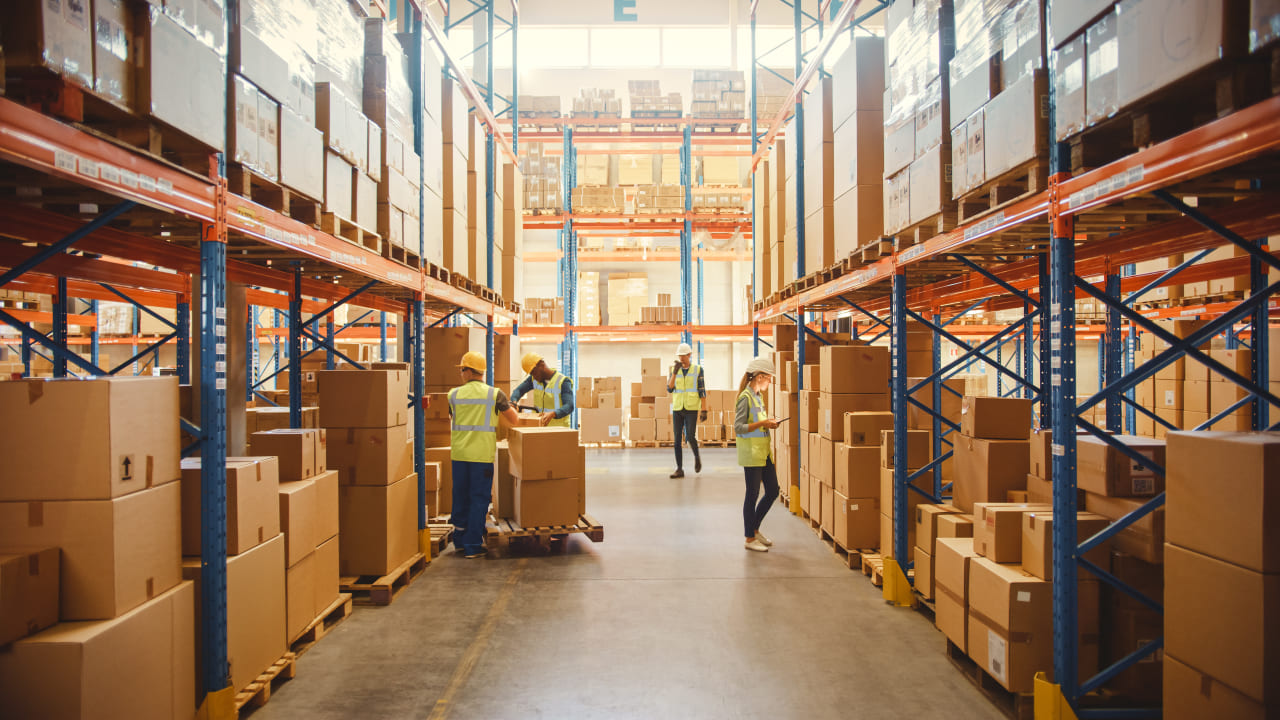
Operationally, handling shows up in the daily workflows of warehousing and shipping: goods are received, checked, intaked, put away, picked, consolidated, packed, labeled, and loaded. In transfer operations, unloading, sorting, buffering, and reloading are added. Each of these steps creates handling effort that translates into time, labor, floor space usage, and equipment performance. Many logistics concepts therefore treat handling as a separate service module that can be measured and controlled.
Strategically, handling matters because it shapes the design of networks and sites. High handling intensity can arise, for example, when product range and order structure are small-batch, when frequent repacking occurs, or when additional services are required. Conversely, standardized load units, suitable packaging, and aligned process interfaces can reduce handling effort. In e-commerce and omnichannel structures, handling is often particularly relevant because many individual line items are processed and short delivery times require tight cycles.
Handling is also closely related to quality and safety. Improper handling increases the risk of damage, shortages, or wrong allocations. For sensitive goods groups (e.g., fragile items, temperature-controlled goods, dangerous goods), specific handling requirements are needed that affect packaging, labeling, equipment, and process discipline. Ergonomic and occupational safety aspects also play a role, since handling often involves physical strain, lifting, and traffic in warehouse and transfer areas.
Discover a variety of technical terms and in-depth explanations in our Zenfulfillment logistics lexicon.
Regardless of whether you are looking for the basic definitions of familiar terms or are interested in detailed explanations of complex topics — our logistics lexicon provides you with comprehensive information to help you To better understand the world of logistics and e-commerce.
Be inspired by practical examples, learn about new trends and discover helpful tips that will help you to continuously expand your knowledge in the logistics industry and stay up to date.


