
Logistics management covers the planning, control, execution, and oversight of logistics processes within a company and across company boundaries. The focus is on the targeted design of flows of goods, materials, and information and aligning them with resources like staff, warehouse space, transport capacity, and IT systems. The goal: deliver the right goods in the required quantity and quality, at the right time and place — while keeping costs and service levels in check.
In practice, logistics management connects operational tasks (e.g., daily dispatching, warehouse control, transport execution) with strategic decisions (e.g., site selection, network design, make-or-buy, outsourcing to logistics providers). It's closely tied to purchasing, production, sales, and customer service, because logistics performance directly shapes order fulfillment, lead times, and inventory levels.
Logistics is typically viewed as a process chain: from procurement through internal material flows and storage to distribution and — depending on the business model — the return of goods. Logistics management is therefore a core element of the broader supply chain management, which also includes cross-company coordination of partners, risks, and value streams.
As a cross-functional discipline, logistics management operates within a system that brings together physical movements and information processing. On the physical side: transport, handling, storage, picking, and packaging. On the information side: demand and inventory data, shipping notifications, status updates, and master data — all maintained and processed in systems. Only when both sides are synchronized do you get stable operations and meaningful performance metrics.
Trade-offs are part of the territory and need to be balanced. Higher inventory levels often improve order availability but tie up capital and rack up storage costs. Faster transport modes can shorten lead times but often cost more or are less sustainable. This creates a steering need that shows up in metrics like on-time delivery, lead time, inventory days of supply, inventory turnover, picking error rate, or transport cost per shipment.
Typical areas include procurement logistics (inbound and supply), production logistics (in-house material provision and flow control), distribution logistics (delivery to the customer), and disposal and reverse logistics (returns, recycling streams, refurbishment). Priorities shift by industry: manufacturers focus on material flow and production tie-in, while retail and E-Commerce typically center on warehousing and shipping processes with high product variety and fluctuating demand.
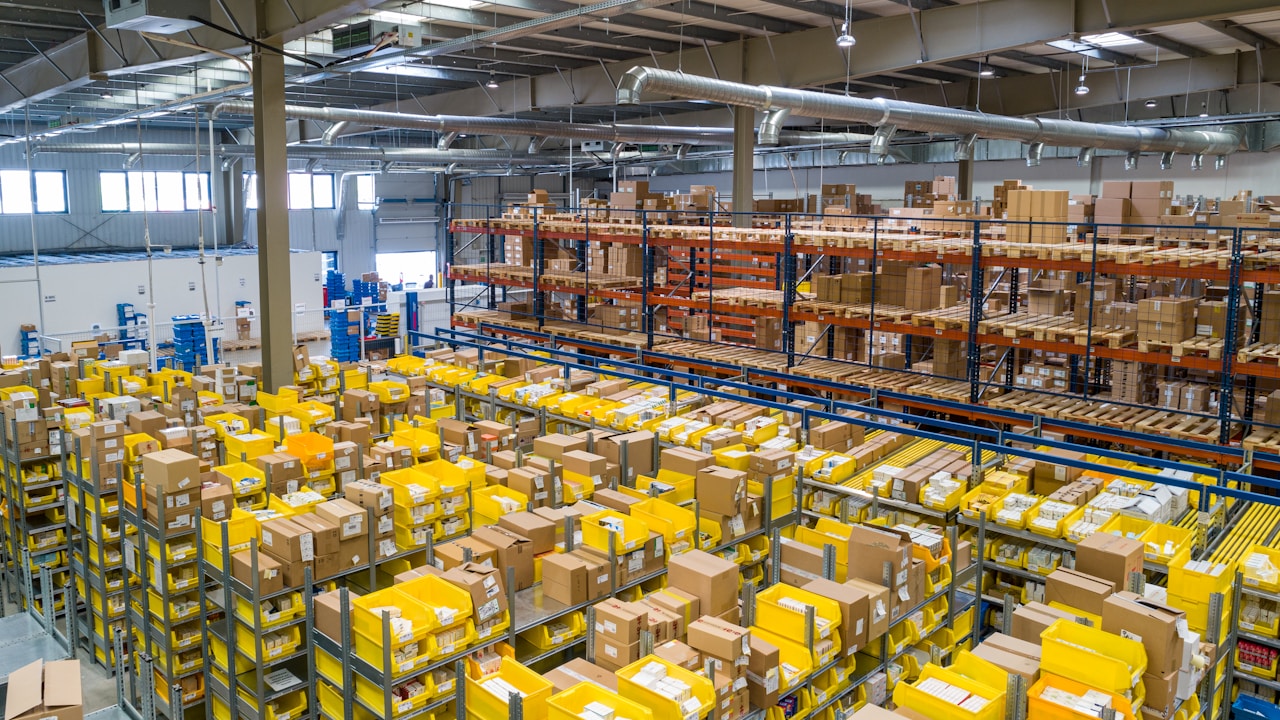
Day to day, logistics management covers executing and fine-tuning recurring workflows. That includes goods receipt with quality and quantity checks, putaway and replenishment, order processing in the warehouse (picking, consolidation, packaging), shipping (labels, documents, handover to carriers), and continuous inventory management. Operational decisions are mostly short-term and aim at stability, on-time delivery, and even capacity utilization.
Strategic aspects deal with the long-term direction and design of logistics structures. That includes designing warehouse and distribution networks, defining service levels, choosing storage technologies, automation levels, and IT architectures, and shaping transport and contract logistics models. Equally strategic is integrating partners — through standardized data interfaces, forecast collaboration, or contractually defined quality and performance requirements.
Digitalization shapes both levels. Systems like WMS (Warehouse Management System) and TMS (Transport Management System) support planning and control, while track-and-trace, scan processes, and sensor technology bring transparency to inventory and shipment status. At the same time, resilience and risk management are gaining importance — handling capacity shortages, supply disruptions, geopolitical risks, or seasonal demand peaks. Sustainability is also increasingly factored in as a steering variable, through emissions measurement, route optimization, packaging design, or shipment consolidation.
Discover a variety of technical terms and in-depth explanations in our Zenfulfillment logistics lexicon.
Regardless of whether you are looking for the basic definitions of familiar terms or are interested in detailed explanations of complex topics — our logistics lexicon provides you with comprehensive information to help you To better understand the world of logistics and e-commerce.
Be inspired by practical examples, learn about new trends and discover helpful tips that will help you to continuously expand your knowledge in the logistics industry and stay up to date.


