
Materials management covers all activities aimed at making materials and goods available in the right quantity, quality, at the right time, and in the right place. The term is widely used across industry, trade, and logistics, and typically includes material requirements planning, procurement, warehousing, and internal supply. The goal is to secure supply while keeping costs, capital tied up in stock, and risks in check.
Functionally, materials management sits at the interface between external supply markets and internal points of consumption — production, assembly, or shipping. It connects commercial aspects (e.g. supplier management, prices, contract terms) with operational demands (e.g. delivery windows, inventory management, picking capability). Depending on the organization, materials management can be run as a standalone function or sit inside procurement, logistics, or supply chain management.
Materials management becomes especially relevant when there's a wide product range, fluctuating demand, or long replenishment lead times. In those environments, stock decisions directly affect delivery capability and process stability. At the same time, stockouts, overstock, quality deviations, or delivery delays feed straight through to costs, throughput times, and customer satisfaction.
As part of the overall logistics system, materials management controls material flows and information flows along internal supply. It coordinates which items are needed in which form (e.g. packaging unit, batch, best-before date) and how they're integrated into the warehouse and processes. That includes decisions on storage strategies, safety stocks, order cycles, and replenishment methods, plus coordination with receiving, quality inspection, and warehouse operations.
Typical task areas include material requirements planning (deterministic or consumption-driven), order disposition, inventory control, and ensuring material availability at points of consumption. In production environments, this often covers line or workstation supply (e.g. via Kanban or milk-run concepts), while in retail and E-Commerce the focus shifts to product availability for picking and shipping.
Key features of materials management are its closeness to operational processes and its orientation toward trade-offs. High availability tends to require more stock, while low stock reduces capital tied up but raises stockout risk. That's why materials management often relies on KPIs like service level, days of supply, inventory turnover, warehousing costs, stockout costs, or on-time delivery rate to make decisions traceable.
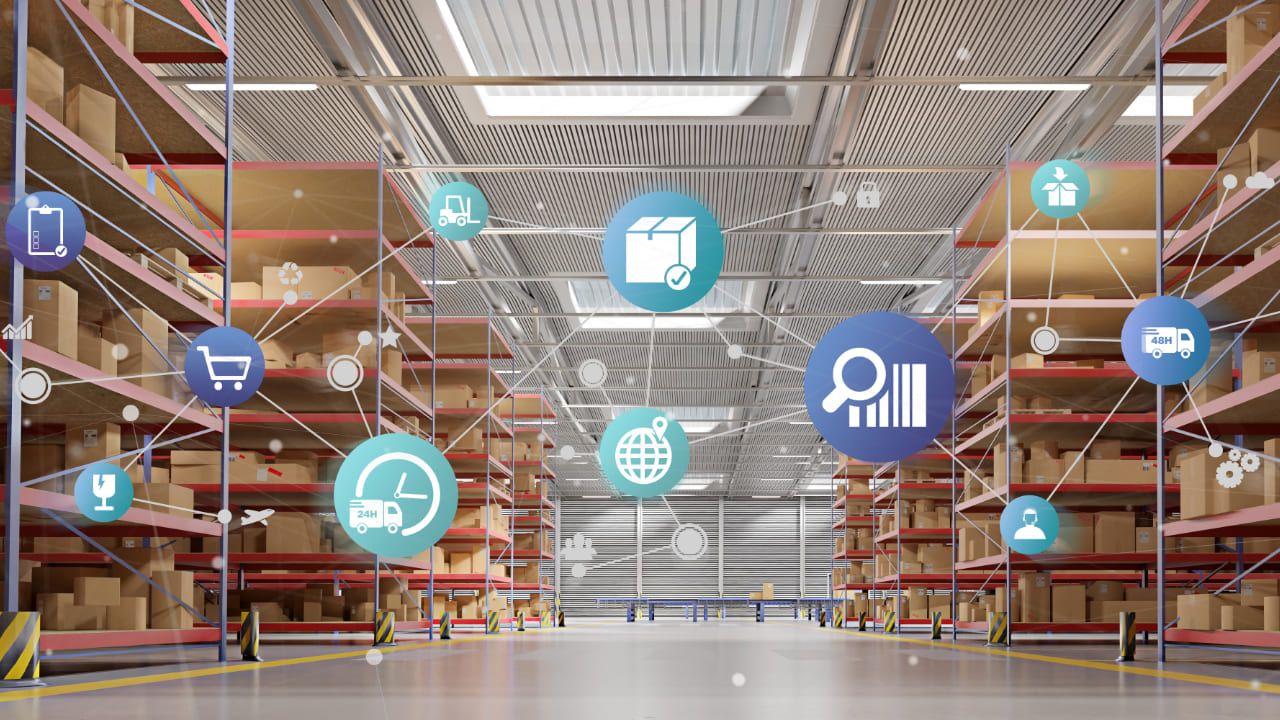
Materials management operates on both an operational and a strategic level. Operationally, the focus is on securing short-term supply, processing orders, monitoring deadlines, and managing deviations — like late deliveries, quantity or quality discrepancies. That also includes coordinating receiving, posting goods into the warehouse, recording stock, and making materials available for downstream processes like production or shipping.
Strategically, materials management covers decisions about procurement and inventory concepts, supplier structures, item standardization, packaging and load carrier concepts, and the design of planning parameters. In many companies, this is supported by IT systems like ERP, inventory management, or specialized planning and forecasting solutions. Master data quality (e.g. item master data, lead times, minimum order quantities, packaging units) is a key success factor here, since faulty data leads to wrong stock levels and unstable processes.
In logistics and E-Commerce, the importance of materials management shows up clearly when assortment depth, seasonal peaks, or volatile demand swing inventory levels. Well-aligned materials management supports steady warehouse utilization, predictable replenishment, and strong delivery capability. At the same time, it cuts operational friction — like items missing from the picking warehouse, unsuitable packaging units, unplanned stock transfers, or elevated return rates from quality and batch issues.
Sustainability and risk topics also play a growing role. These include assessing supply chain risks, hedging against bottlenecks, handling alternative sources, and optimizing transport and packaging effort. Materials management therefore shapes not just costs and service levels but also the resilience of the supply chain and the stability of operational delivery.
Procurement (Purchasing): The process of selecting suppliers and ordering materials and goods; closely interlinked with materials management.
Disposition (Order Planning): Operational planning and control of order quantities and timing based on demand, stock, and lead times.
Material Requirements Planning (MRP): Method for determining material needs, often modeled in the ERP system based on bills of materials and production schedules.
Inventory Management: Control and monitoring of stock levels with the goal of balancing availability, costs, and capital tied up.
Inventory Management System (IMS): IT system for managing items, stock, movements, and often also order and sales processes.
Supply Chain Management (SCM): Cross-functional planning and control of material, information, and financial flows across the entire supply chain.
Receiving: Acceptance, inspection, and posting of incoming goods as a prerequisite for storage and further processing.
Service Level: A KPI for delivery capability, often defined as the share of demand met without stockout.
Discover a variety of technical terms and in-depth explanations in our Zenfulfillment logistics lexicon.
Regardless of whether you are looking for the basic definitions of familiar terms or are interested in detailed explanations of complex topics — our logistics lexicon provides you with comprehensive information to help you To better understand the world of logistics and e-commerce.
Be inspired by practical examples, learn about new trends and discover helpful tips that will help you to continuously expand your knowledge in the logistics industry and stay up to date.


