
A one-way pallet is a transport pallet designed primarily for single use or for a few cycles within a supply chain. Unlike reusable or exchange pallets, the focus isn't on long-term reuse but on cost-effective provision of load carriers for one-time shipping, export deliveries, or irregular return options. One-way pallets are used to bundle goods, enable handling with industrial trucks, and stabilize cargo during storage and transport processes.
In a logistics context, the one-way pallet is part of the packaging and load-carrier hierarchy. It's often considered a secondary or tertiary packaging component because it consolidates units of cartons, sacks, or containers into a transportable load unit. In networks without pallet exchange or assured returns, one-way pallets are used to reduce complexity. At the same time, they're a cost factor and influence parameters such as load utilization, handling times, and disposal or recovery routes at the receiving end.
In practice, the term is sometimes also used for pallets that can be reused multiple times but aren't structurally designed for an intensive cycle. What matters is less the absolute number of possible uses than the planned use within the given system: one-way means that return transport, sorting, and reconditioning aren't planned or aren't economically worthwhile.
One-way pallets are usually lighter and more simply constructed than premium reusable pallets. They're often made of wood, less commonly of pressed wood, corrugated composite structures, or simple plastic versions. Construction variants include deck pallets with blocks or runners, half-pallet formats, and custom dimensions for specific packages. Load capacity depends heavily on material, design, wood moisture, nail pattern, and the type of load distribution.
Typical features are reduced material thickness, lower standardization compared to standard EUR-pallets, and a design built for a specific load class or transport route. This can lead to differences in entry options: some one-way pallets are only two-way entry, others four-way. Suitability for automated conveyor systems or high-bay warehouses depends on dimensional accuracy, deflection, edge quality, and the stability of the substructure.
One-way pallets are used in many fields. They're often found in export and direct-shipment business when pallet exchange isn't practical. They're also used during seasonal shipping peaks, one-off retail campaigns, direct deliveries to end-customer-adjacent locations, or with diverse recipient structures. In industrial supply chains, one-way pallets are also used to support specific product geometries or to integrate the pallet as part of a one-way packaging solution, for example with sensitive or very heavy goods. In temperature-controlled or hygienically sensitive areas, material choice and surface finish can play an additional role.
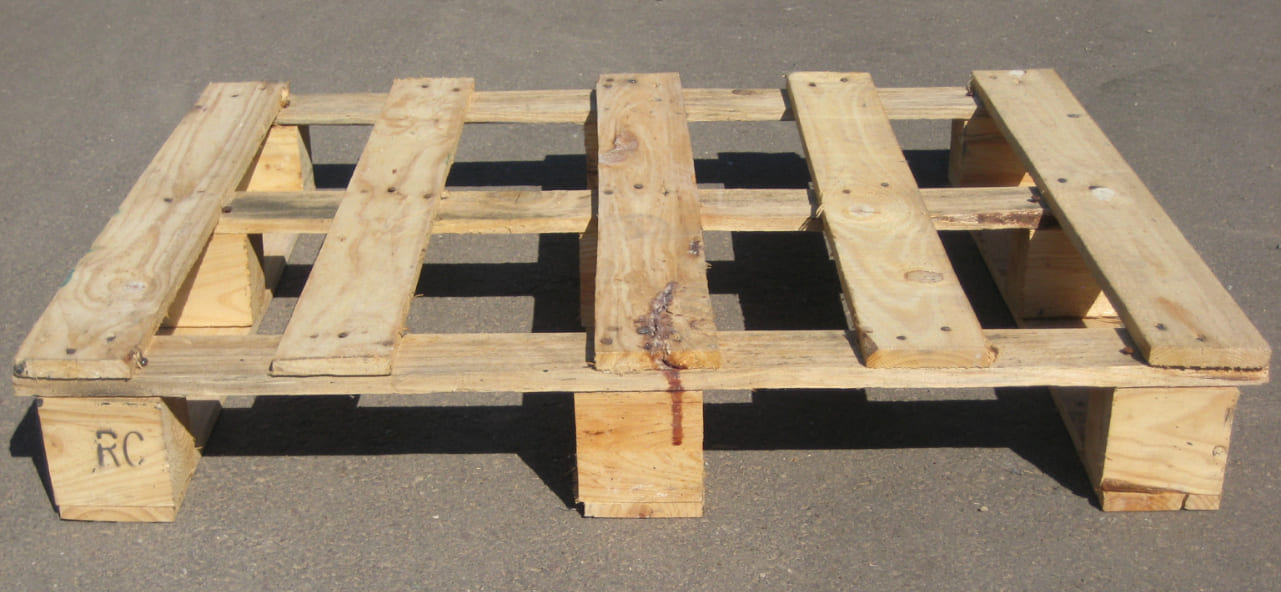
The one-way pallet influences logistics processes along the entire shipping chain. For shippers, it can simplify short-term sourcing of load carriers since no pool or exchange organization needs to be set up. In transport and handling, it affects load unit stability, stackability, and the risk of transit damage. A less rigid pallet can deform more under dynamic loads (braking, cornering, vibrations), which indirectly raises requirements for strapping, stretch wrapping, or edge protection.
In e-commerce and distribution-heavy networks, pallet usage depends heavily on the shipping structure. While parcel shipping often does without pallets, one-way pallets are used for high-volume shipments, store deliveries, freight shipping, or cross-docking processes to bundle picking and handling activities. The pallet can also serve as a base carrier for mixed pallets that combine different items into one shipment. Dimensional accuracy matters for scanners and conveyor systems, but also for load planning in trucks or containers.
Another aspect is handling at goods receipt. The question is whether the one-way pallet is reused, moved internally, or disposed of directly. Depending on regional requirements and disposal infrastructure, this can lead to different costs and process steps. Wood treatment is also significant in international shipping: wooden pallets may need to meet phytosanitary requirements depending on the destination country to prevent the introduction of pests. This makes the one-way pallet not just a physical load carrier but also a compliance-relevant part of the supply chain.
Discover a variety of technical terms and in-depth explanations in our Zenfulfillment logistics lexicon.
Regardless of whether you are looking for the basic definitions of familiar terms or are interested in detailed explanations of complex topics — our logistics lexicon provides you with comprehensive information to help you To better understand the world of logistics and e-commerce.
Be inspired by practical examples, learn about new trends and discover helpful tips that will help you to continuously expand your knowledge in the logistics industry and stay up to date.


