
Order picking is the logistics process of deliberately retrieving and assembling goods from inventory to form an order-specific unit. That unit may be a customer order, a store delivery, or a production supply package. At its core, order picking links the warehouse inventory with the downstream material flow by selecting the required item quantities from many storage locations.
The term is often used in the context of warehouse logistics, shipping, and distribution and covers both organizational and operational tasks. Depending on the environment, picking can be manual, partly automated, or fully automated. Typically, the process is triggered by order data from an inventory, ERP, or warehouse management system that defines the items, quantities, and target locations.
Order picking should be distinguished from other warehouse processes: while putaway moves goods into stock and goods issue organizes shipping or handover, picking focuses on assembling goods exactly to an order. In many operations, it is one of the most time- and cost-intensive steps in warehouse work, as it often involves long travel paths, many individual moves, and high variant variety.
Order picking can be described as a sequence of typical work steps: order generation, providing information (e.g., pick lists or scanner-driven tasks), retrieval (pick), confirmation, and handover to downstream areas like packing, consolidation, or shipping. In practice, the structure is heavily shaped by warehouse layout, item structure, and order profile — things like number of lines per order, unit counts, weight, and handling characteristics.
Key features include the choice of picking strategy, the design of warehouse zones, and priority management. Common forms are single-order or batch picking, zone picking (e.g., by temperature areas), or picking by item group. The question of whether the worker goes to the goods or the goods come to the worker is also defining: in "person-to-goods" approaches, workers travel to storage locations, while in "goods-to-person" setups, conveyor or shuttle systems bring items to a fixed workstation.
Picking is used in nearly every industry with warehouse-supported supply. In e-commerce, small-line, variant-rich orders with high frequency dominate. In wholesale, by contrast, larger quantities and standardized packaging units are common. In production, picking is used to provide materials or components for manufacturing orders — for example, as kits or pre-picked sub-assemblies. In grocery retail, additional requirements come into play, such as separation by fresh, chilled, and frozen goods.
Picking performance is typically characterized by throughput, error rate, and process times. At the same time, quality requirements such as batch or serial-number tracking, best-before dates, and regulatory rules (e.g., in regulated industries) shape the design. The process is often supported by mobile data capture, picking dialogs, pick-by-voice, or pick-by-light — though these tools are not part of the definition itself.
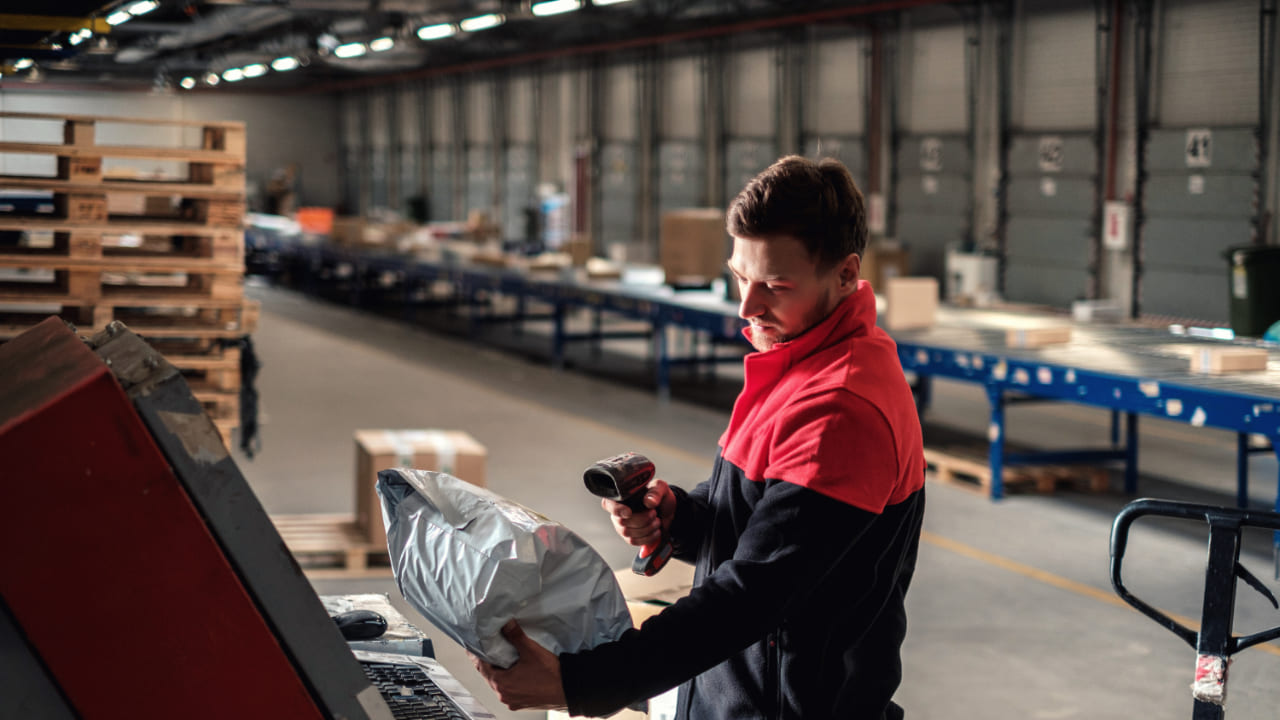
In logistics networks, picking is the hinge between warehousing and distribution. It largely determines how quickly and at what quality orders can be made ready, and therefore shapes service levels such as delivery time, on-time delivery, and order completeness. Because much of warehouse cost comes from labor, internal transport, and floor space, picking is also highly relevant for the economics of fulfillment and distribution centers.
In e-commerce, picking is especially demanding because orders often consist of few line items but arrive in high volumes with constantly changing assortment. This drives high requirements for inventory transparency, short response times, and precise execution to avoid missing or wrong shipments. Returns processes feed back indirectly: putaway of returned items and inventory corrections affect data accuracy and availability.
Strategically, picking sits in the tension field between speed, cost, and error avoidance. A more automated setup can boost process stability but brings investment and integration effort. Manual processes are more flexible for assortment changes and seasonal peaks but depend more on training, ergonomics, and process discipline. In both cases, integration with IT systems is essential so that order prioritization, inventory management, and feedback stay consistent.
Beyond shipping, picking also affects upstream decisions: item slotting, packaging logic, lot sizes, and replenishment are tightly linked to it. A poorly designed slot layout can lengthen travel paths or complicate consolidation, while order-aware item placement reduces process time. So picking isn't just an operational step — it's a key design area within warehouse organization.
Picking: The act of retrieving items from storage locations; often used synonymously with order picking, though it can refer specifically to the retrieval action.
Packing: The downstream step in which picked items are packed, labeled, and made ready to ship.
Consolidation: Bringing together partial quantities or partial orders — for example, from different zones — into one complete shipment.
Replenishment: Refilling pick locations from reserve areas to keep them ready to pick from.
Goods issue: Area and process chain from handover of picked goods through loading or handover to the carrier.
Warehouse Management System (WMS): Software for steering warehouse processes that distributes orders, optimizes paths, and processes feedback for inventory management.
Batch and serial-number tracking: Documentation-required linking of goods to lots or single units that can be considered and confirmed during picking.
Discover a variety of technical terms and in-depth explanations in our Zenfulfillment logistics lexicon.
Regardless of whether you are looking for the basic definitions of familiar terms or are interested in detailed explanations of complex topics — our logistics lexicon provides you with comprehensive information to help you To better understand the world of logistics and e-commerce.
Be inspired by practical examples, learn about new trends and discover helpful tips that will help you to continuously expand your knowledge in the logistics industry and stay up to date.


