A pallet is a standardized or purpose-built load carrier that bundles goods into a manageable load unit. It holds goods stably during storage, handling, and transport, and lets you move them efficiently with material handling equipment like forklifts or pallet trucks. In a logistics context, the pallet is the interface between product packaging, load unit, and transport vehicle — it enables mechanical handling while also shaping requirements around stability, hygiene, and safety.
Pallets show up across nearly every supply chain, from industry and retail to KEP services (courier, express, and parcel logistics) and E-Commerce fulfillment. They support process standardization, for example in warehouse slot planning or in maximizing truck and container capacity. Different industries and product types use different designs and quality grades, and standardized dimensions play a central role.
The main functions of a pallet are carrying and stabilizing load units, reducing handling steps, and enabling stacking and interim storage. In practice, pallets are also part of exchange and pooling systems — that makes them not just a transport aid but a circulating asset with real economic value.
Pallets differ by material, design, load capacity, and dimensions. Common materials are wood, plastic, and metal; pressed wood and cardboard show up less often, for specific use cases. Wooden pallets are widespread because they're durable, repairable, and available in many standards. Plastic pallets are often used where consistent quality, hygiene, or lower moisture absorption matter. Metal pallets work well for heavy loads and closed loops, for example in industrial settings.
For design, the key distinction is between single-use pallets and reusable pallets. Single-use pallets are typically used for one-way shipments and optimized for low purchase cost. Reusable pallets are built for repeated use, often in exchange or pooling systems. Typical builds are two-way or four-way entry, which determines from which directions forklift tines can enter and how efficient handling becomes.
A central standard in European trade is the Euro pallet (also known as the EPAL pallet), whose dimensions make it compatible with warehouse equipment, truck loading floors, and many conveyor systems. Industrial pallets and special formats also exist, adapted to specific products or packaging units. For international shipping, plant health regulations also matter: wooden packaging and wooden pallets may be subject to specific treatment and labeling requirements depending on the destination country, to prevent introducing pests.
Typical use cases range from supplying production lines and replenishing retail stores to warehouse and order picking processes in distribution centers. In temperature-controlled supply chains (e.g. food) or regulated industries (e.g. pharma), pallet material and cleanability can be critical. E-Commerce uses pallets too — for goods receipt, buffer storage, replenishing pack stations, or shipping freight goods — while small parcel items usually skip palletization and go straight into shipping cartons.
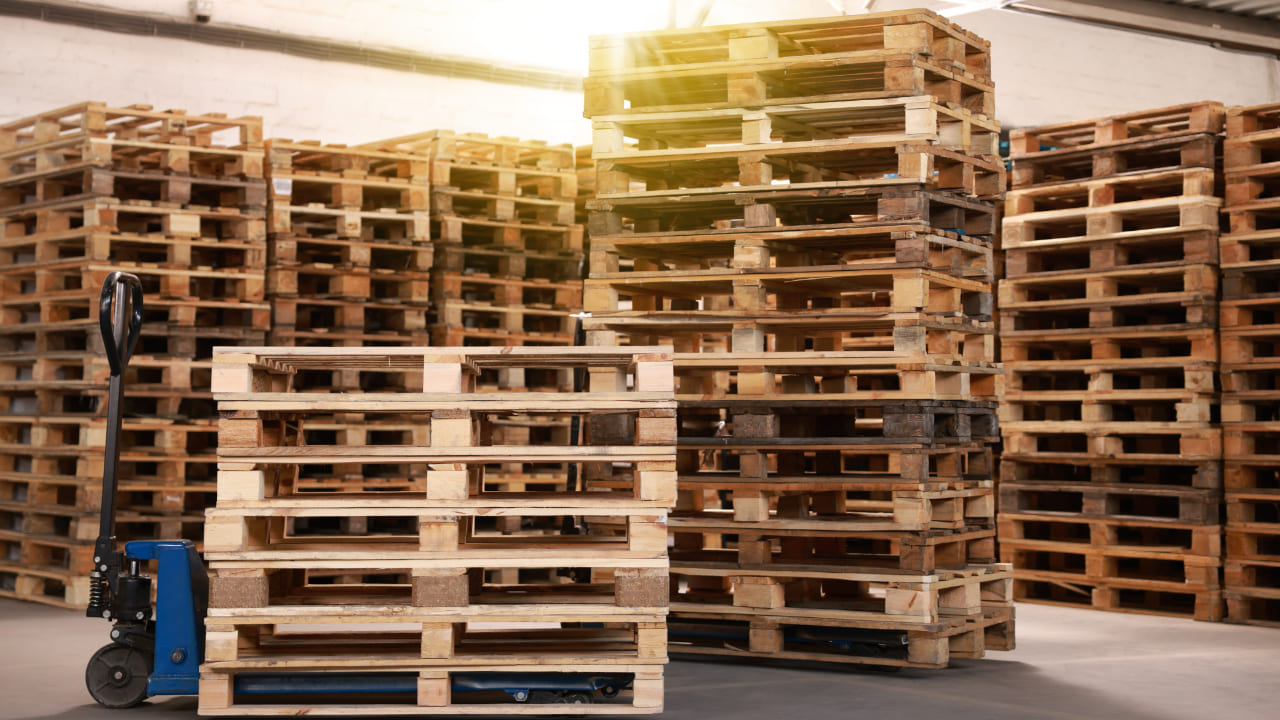
Pallets shape the cost, speed, and quality of logistics flows, because they're directly tied to the concept of the load unit. A stable palletized unit can be handled faster, stored more easily, and planned better than loose goods. At the same time, pallet quality determines process reliability: damaged top boards, warped runners, or insufficient load capacity can cause instability, product damage, or disruption in conveyor and storage systems.
For warehousing, pallet geometry matters because storage locations, racking systems, and conveyor technology are often designed for specific dimensions and clearance heights. Strong standardization makes capacity planning more precise — for example when allocating pallet positions or scheduling deliveries in time windows. Transport relies on pallets too: load patterns, stackability, and load securing depend on pallet design and condition. In intermodal chains (road, rail, sea), standardization improves compatibility, while custom formats can require extra coordination and handling effort.
In E-Commerce, pallets are mainly relevant for goods receipt, putaway, replenishment control, and freight shipping. Palletized items (e.g. large home appliances or bulk goods) often move as complete load units, while fast-moving small items get replenished on pallets at picking or pack zones. Beyond that, exchange and pooling systems affect inventory tracking and accounting, since pallet movements need to be documented and may be tracked as deposit or rental items.
Pallets also have an environmental dimension. Reusable concepts and repairability can lower resource use, while single-use options can still make logistical sense in certain shipping chains — for example when return logistics aren't economical. Pallet selection and use are part of a broader system that shapes efficiency, standardization, and risk in goods flow.
Load carrier: Umbrella term for aids that hold goods and make them transportable, including pallets, mesh boxes, and containers.
Load unit: The combination of goods plus load carrier (e.g. pallet plus stretch wrap), handled as a single unit.
Discover a variety of technical terms and in-depth explanations in our Zenfulfillment logistics lexicon.
Regardless of whether you are looking for the basic definitions of familiar terms or are interested in detailed explanations of complex topics — our logistics lexicon provides you with comprehensive information to help you To better understand the world of logistics and e-commerce.
Be inspired by practical examples, learn about new trends and discover helpful tips that will help you to continuously expand your knowledge in the logistics industry and stay up to date.


