
Putaway describes the process of moving goods, materials, or packages into a storage or holding system after goods receipt. The goal is to make stock available in an organized layout, with correct quantities and identifiable units, until later retrieval, processing, or shipment. Putaway is therefore a central part of warehousing and forms the interface between goods receipt and inventory management.
In a logistics context, putaway involves more than just placing goods. The process typically includes identifying the goods (e.g., via item numbers or batches), assigning them to a storage location, physically moving them there, and recording the transaction in the inventory or warehouse management system. Depending on the goods, requirements for safety, quality preservation, and traceability also play a role, for example with food, hazardous materials, or pharmaceutical products.
Putaway happens in different warehouse types, such as block storage, rack storage, automated high-bay warehouses, or external storage locations. The specific setup depends on factors such as item structure, turnover frequency, packaging form, temperature requirements, and the required service level. In practice, putaway can be manual, semi-automated, or fully automated — for example through conveyor systems, automated stacker cranes, or shuttle systems.
Characteristic of putaway is the combination of physical material flow and information flow. While goods are moved and positioned, inventory data is updated and storage locations are managed in parallel. Structured putaway supports inventory accuracy, shortens search times, and reduces picking errors during later retrievals.
A key feature is storage location assignment. This can be fixed (a fixed location per item), random/dynamic (flexible location assignment based on availability), or zone-based (assignment by product group, hazard class, or temperature zone). Strategies such as putaway by ABC class or by turnover frequency further determine how close items are to picking areas or retrieval points.
Putaway applications range from production and raw materials warehouses to distribution centers and fulfillment warehouses for e-commerce. In industry, the focus is often on supplying production lines, while in retail, fast availability and assortment breadth are key. In temperature-controlled or regulated areas (e.g., cold chains, pharma), additional requirements apply for maintaining defined storage conditions and meeting documentation obligations.
Putaway is often supported by tools for identification and data capture, such as barcodes, RFID, or serial-number tagging. This allows precise inventory management and traceability of goods movements. In automated environments, putaway is closely integrated with control and warehouse management systems, which coordinate storage locations, conveyor routes, and putaway sequences at the system level.
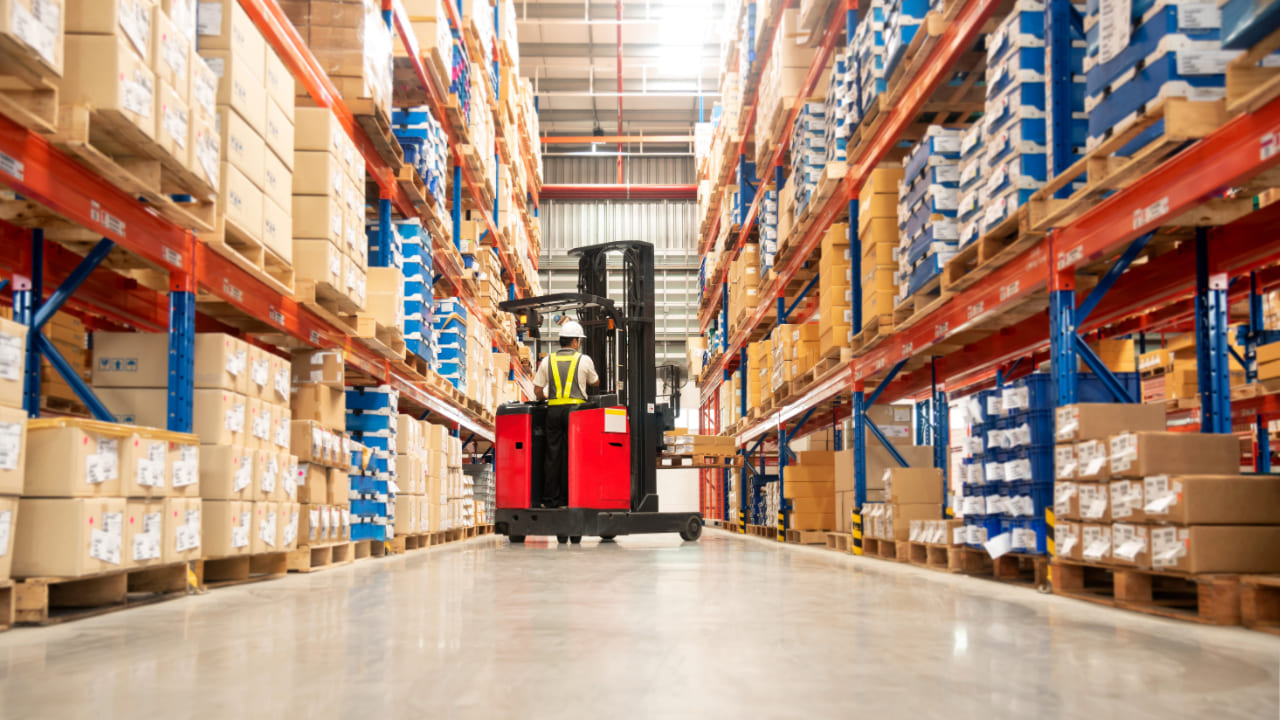
Putaway significantly affects the performance of downstream processes such as picking, packing, and shipping. Correct and systematically documented putaway is the foundation for reliable inventory information, which in turn supports availability indicators, replenishment control, and delivery promises. Errors at this step often surface later, for example through inventory discrepancies, search effort, or incorrect deliveries.
In e-commerce, putaway is especially closely tied to requirements for speed, assortment dynamics, and returns processing. Frequent SKU turnover, seasonal peaks, and small-quantity orders raise the importance of a warehouse structure that enables short paths and clear identification. At the same time, putaway processes often need to harmonize with returns flows, since returned items are re-stocked, repackaged, or removed depending on their condition. This makes putaway part of inventory quality and operational stability.
From a cost and quality perspective, putaway is also relevant. It affects floor utilization, staffing, throughput times, and inventory effort. It also helps protect goods through suitable storage aids, correct stacking, and adherence to environmental conditions. In regulated industries, traceable putaway also supports compliance, for example through batch and serial-number tracking and documented stock movements.
Goods receipt: Process step before putaway in which goods are accepted, inspected, and recorded in the system.
Storage location: Defined spot in the warehouse to which goods are assigned for organized storage.
Discover a variety of technical terms and in-depth explanations in our Zenfulfillment logistics lexicon.
Regardless of whether you are looking for the basic definitions of familiar terms or are interested in detailed explanations of complex topics — our logistics lexicon provides you with comprehensive information to help you To better understand the world of logistics and e-commerce.
Be inspired by practical examples, learn about new trends and discover helpful tips that will help you to continuously expand your knowledge in the logistics industry and stay up to date.


