The term supply chain describes the overall system of all participants, resources, and processes needed to deliver a product or service from origin to end customer. Unlike a purely internal view, the supply chain spans multiple companies and locations and links flows of materials, information, and often finance. The chain typically starts at raw-material sources or upstream suppliers and runs through production, warehousing, and transport to distribution and delivery.
In practice, the term is used more or less broadly depending on context. It often refers to the physical movement of goods, but it's also a frame for describing planning and control tasks — demand planning, procurement, production planning, inventory management, transport scheduling, and coordination with trading partners. A supply chain may look linear, but it is usually a network with several supplier tiers, alternative transport routes, and regionally distributed nodes.
A supply chain can be understood as an overarching value-creation and supply network in which several functions interact: procurement, production, logistics, distribution, plus supporting processes such as quality management, compliance, or IT. From this perspective, logistics is a key sub-area, while supply chain captures the broader system view.
This classification matters because decisions in one part of the chain affect others. For example, reducing inventory can lower tied-up capital but also raise the risk of stock-outs. Likewise, lot sizes, lead times, and transport modes shape service capability and total cost. Supply chain thinking therefore focuses on how the parties interact, not only on optimizing individual process steps.
Typical structural elements of a supply chain are nodes and connections: suppliers, production sites, warehouses, transshipment points, transport networks, distribution centers, and end customers. Different flows run between these elements. The material flow covers raw materials, semi-finished goods, and finished goods. The information flow includes orders, forecasts, tracking, and inventory data. The financial flow covers payment terms, invoicing, or customs and duty processes.
Key features include multi-tier structures (with upstream suppliers), the interdependence of processes, and variability in demand, lead times, and capacities. Supply chains can also be characterized by reach (local, regional, global), control logic (push, pull, or hybrid models), and risk profile (e.g., single sourcing vs. multi sourcing).
Areas of use exist in nearly every industry that plans and coordinates flows of goods. In manufacturing, the focus is often on production supply, parts availability, and international procurement. In retail, store replenishment, assortment management, and inventory distribution take center stage. In consumer goods and e-commerce, broad assortments, seasonal peaks, return flows, and short delivery promises move into the spotlight. Even services with physical components (e.g., spare parts supply) depend on a supply chain perspective.
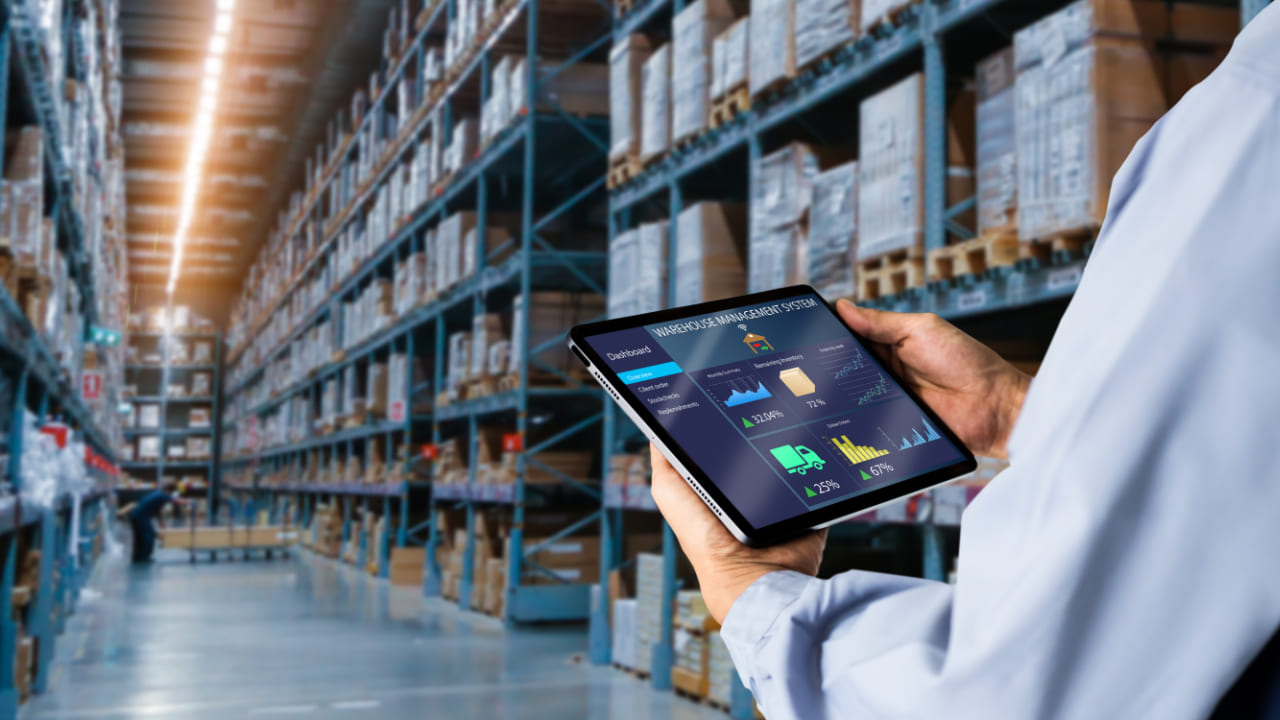
For logistics and e-commerce, the supply chain is a central reference frame because service expectations, costs, and speed are in particularly tight tension here. Short delivery times, flexible delivery options, and transparent shipment tracking are decisive for many business models. At the same time, broad assortments, international sourcing, and fluctuating demand make control more complex.
In e-commerce, the supply chain affects not only product availability but also the customer experience and return rate. Factors such as accurate inventory data, reliable fulfillment processes, suitable packaging, carrier selection, and a structured returns management are tightly linked. The supply chain perspective helps treat these areas as one connected system: delays at goods receipt affect picking, warehouse bottlenecks change carrier choices, and unclear tracking data adds work for customer service.
Risk topics also become visible through the supply chain. These include disruptions from capacity bottlenecks, geopolitical events, customs and regulatory changes, quality issues at upstream suppliers, or transport route failures. In many organizations, the supply chain is therefore both an operational steering object and an approach to building resilience — through alternative sourcing, safety stocks, flexible transport options, or contractual service-level agreements with logistics partners.
Discover a variety of technical terms and in-depth explanations in our Zenfulfillment logistics lexicon.
Regardless of whether you are looking for the basic definitions of familiar terms or are interested in detailed explanations of complex topics — our logistics lexicon provides you with comprehensive information to help you To better understand the world of logistics and e-commerce.
Be inspired by practical examples, learn about new trends and discover helpful tips that will help you to continuously expand your knowledge in the logistics industry and stay up to date.


