
A truck with a swap body is a heavy goods vehicle designed to transport interchangeable load units. The swap body (also called demountable body or exchange container) is not permanently attached to the chassis but can be set down and picked up again using suitable equipment. Unlike fixed-body box or curtainsider vehicles, the swap body system emphasizes the separation between tractor unit and load carrier.
Swap bodies are widely used in road transport, especially in less-than-truckload, parcel, and network operations, because they enable standardized and predictable handling. A typical use case is hub-and-spoke operations: at a depot or transfer point, the loaded unit is set down so the tractor can quickly continue working. This boosts vehicle availability without loading and unloading times tying up the tractor.
Legally and technically, swap bodies are classified as load units built for combined road transport. They are not containers in the maritime sense, although they sometimes share similar standard dimensions. In practice, the term "swap body" is often used synonymously with "exchange container," even though design and equipment can vary significantly depending on the transport task.
The essential feature of a truck with a swap body is the ability to switch load units quickly. Swap bodies are usually equipped with foldable support legs, so they can stand on the ground without additional lifting gear. The tractor drives underneath the unit, lifts it above chassis level, and locks it in place. Depending on the system, different locking and lifting mechanisms are used, such as air suspension, hydraulic elements, or special swap frames.
Common swap body designs follow classic truck body styles but are optimized for swapping. Widespread variants include box swap bodies (enclosed, theft- and weather-protected), curtainsider swap bodies (laterally accessible, flexible), and versions with load securing systems or special interior fittings. Dimensions are often chosen to harmonize with European pallet sizes and to be efficiently handled in sorting and transfer facilities.
The advantage shows especially where dwell times and dock capacity are critical. Typical use cases include:
Technical and operational conditions influence suitability: parking areas must be load-bearing and sufficiently sized, and yard management workflows must align with the availability of empty and loaded units. The system is also often combined with trailers, so a tractor unit can transport swap bodies on both the motor vehicle and a trailer.
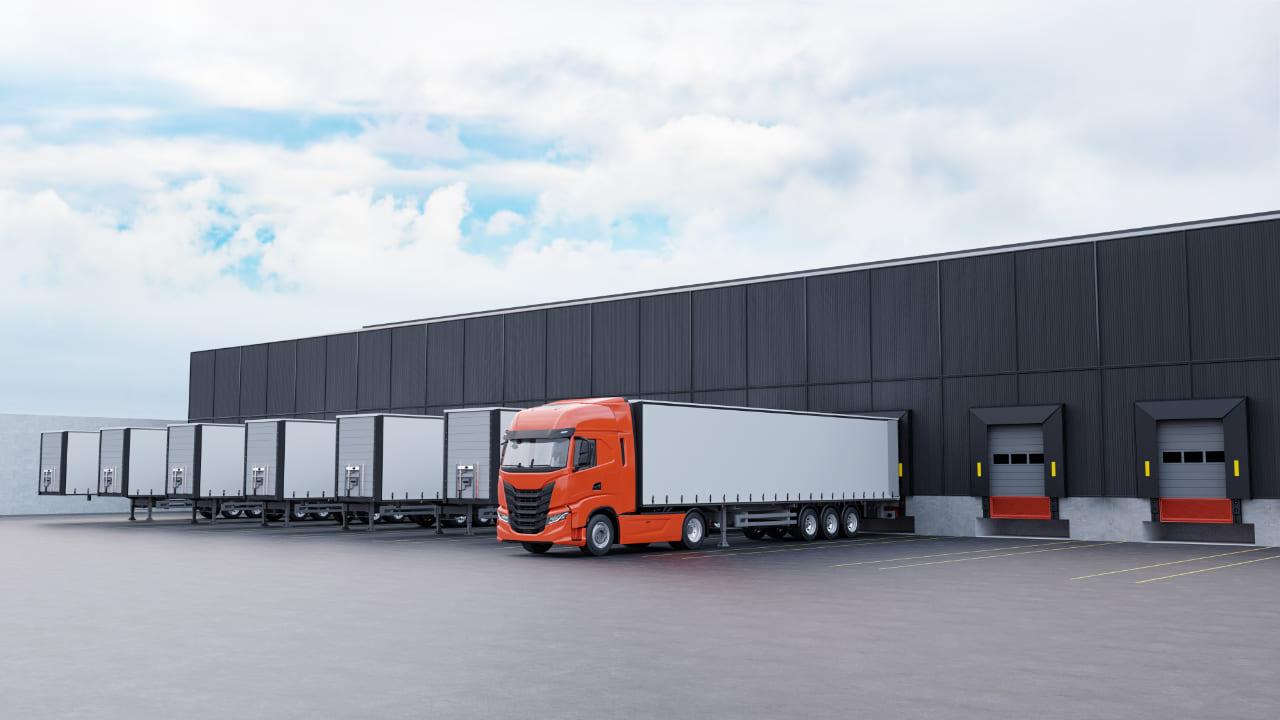
In logistics, the truck with a swap body represents a clear separation between transport capacity (tractor unit) and load unit (swap body). This decoupling affects several process areas: handling, vehicle utilization, time-slot planning, and the control of load equipment and parking spaces. Particularly in network-based operations, the system supports high tractor turnover, because the time-consuming loading and unloading at the dock is not necessarily tied to the vehicle's presence.
For e-commerce and parcel networks, this is often relevant, since shipment volumes fluctuate strongly while strict cut-off times must be met. Swap bodies can serve as temporary buffers, for example when loading and departure are time-decoupled or when sorting and transfer processes are organized in waves. In returns or promotional operations, additional swap bodies can also be deployed as a flexible capacity reserve without having to provide more tractor units immediately.
At the same time, specific process control requirements arise. The pool of swap bodies must be managed (empty, loaded, in repair, tied to a site), and the assignment to lines, tours, or shipment flows is central to network stability. Safety and quality aspects also play a role: enclosed box swap bodies offer protection against weather and unauthorized access, while curtainsider solutions provide more flexibility for side loading. The choice of design therefore depends heavily on goods type, transfer technology, damage risks, and the infrastructure conditions at each site.
Swap Body (Demountable Body): Detachable load unit with support legs, transported on truck chassis and often also on trailers.
Exchange Container: Umbrella term for interchangeable load units; in practice often synonymous with swap body, sometimes also used for other interchangeable bodies.
Tractor Unit: Motorized vehicle that pulls trailers or semi-trailers; in swap body systems often used as the carrier of transport performance.
Motor Vehicle (Rigid Truck): Truck with its own load floor or a frame for mounting a body; can carry swap bodies and is often combined with a trailer.
Truck and Trailer Combination: Combination of motor vehicle and trailer; typical in swap body operations to transport several swap bodies at once.
Articulated Truck / Semi-Trailer: Transport combination of tractor unit and semi-trailer; differs from the swap body system in coupling and usually in load units.
Load Unit: Standardized unit for bundling shipments, e.g., swap body, container, or exchange box, aimed at efficient handling processes.
Handling / Transfer: Movement of goods or load units between transport modes or vehicles, for example in depot or hub operations.
Discover a variety of technical terms and in-depth explanations in our Zenfulfillment logistics lexicon.
Regardless of whether you are looking for the basic definitions of familiar terms or are interested in detailed explanations of complex topics — our logistics lexicon provides you with comprehensive information to help you To better understand the world of logistics and e-commerce.
Be inspired by practical examples, learn about new trends and discover helpful tips that will help you to continuously expand your knowledge in the logistics industry and stay up to date.


