Definition and Context
Random storage (also called dynamic storage) refers to a warehousing principle in which items don't have a permanently assigned location. Instead, units are distributed across whichever suitable storage location is currently available at the time of put-away. "Order" doesn't come from fixed slot assignments — it comes from system-driven management of all storage locations, stock, and movements.
In contrast to static storage, where an item typically always sits in the same position, random storage follows the principle of using free capacity flexibly. The prerequisite is unique identification of storage locations and units — e.g., via barcodes, 2D codes, or RFID — along with reliable booking logic. In many environments, a warehouse management system (WMS) decides which location is suitable for an item or batch and documents the assignment in real time.
The term "random" can be misleading: it doesn't mean disorder but rather a non-fixed, varying location assignment. The goal is to use warehouse space more efficiently and adapt put-away and pick processes to changing assortments and volumes. The principle appears in manual warehouses as well as in semi- or fully automated systems and is especially common where many item variants, fluctuating demand, or short-notice relocations occur.
Structure, Characteristics, and Areas of Use
Random storage typically rests on a fine-grained warehouse structure with uniquely addressable areas — for example aisle, rack, level, and bin. Put-away decisions follow defined criteria that can vary by operation. Common factors include dimensions and weight, warehouse zoning concepts, safety or hazardous goods rules, temperature ranges, compatibility (e.g., substances that can't be stored together), and the current load on individual zones.
A central characteristic is stock and location transparency: every movement is booked, so it's always traceable where a given unit is. This goes hand in hand with a high dependence on accurate data and process discipline. Mis-bookings or unrecorded movements lead to search effort faster than in systems where items are always expected at the same place.
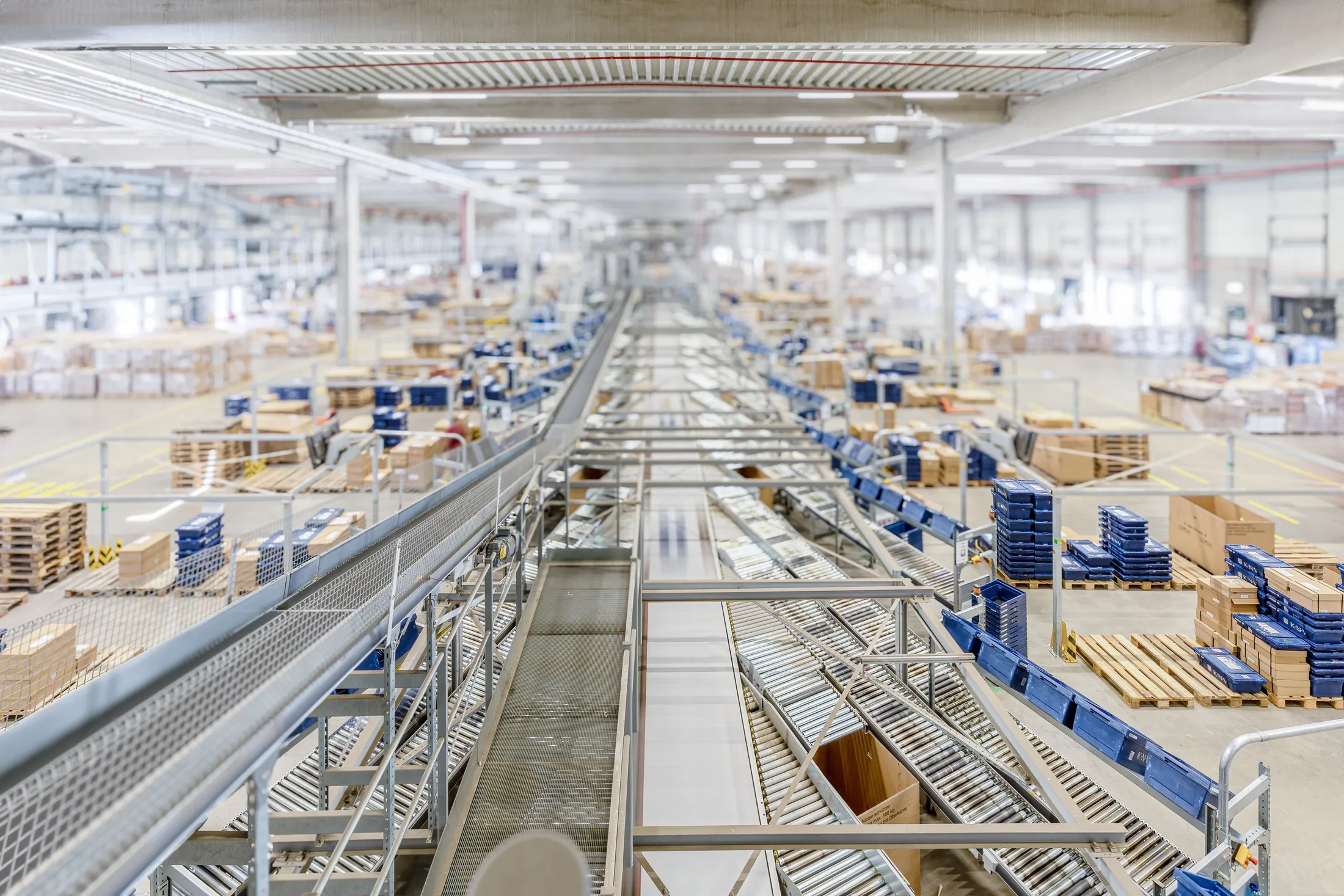
Use cases arise above all where flexibility and space utilization matter. In distribution and fulfillment setups with many SKUs (Stock Keeping Units), the principle enables dynamic distribution — especially with seasonal assortments or strongly varying item turnover. In spare parts warehouses with high item variety and hard-to-predict demand patterns, dynamic assignment can simplify capacity planning. In automated small-parts warehouses, shuttle systems, or tote systems, random storage is also often part of the system logic, since free locations are continuously utilized optimally.
At the same time, hybrid forms exist in practice. For example, A items can be deliberately placed in well-accessible zones, while B and C items are randomly distributed. Likewise, put-away can happen randomly while withdrawal is steered by strategies such as FIFO or FEFO. Random storage is therefore less a rigid rulebook and more an organizing principle that can be combined with other warehouse and picking strategies.
Relevance for Logistics and E-Commerce
In logistics networks and e-commerce, random storage carries particular weight because assortments are often broad, turnover is dynamic, and floor space costs are significant. By flexibly using free locations, storage density can rise, since gaps and remaining capacity are utilized better. This effect is especially noticeable with small parts, tote storage, or strongly fluctuating stock.
Operationally, the principle shapes put-away, relocation, inventory, and picking processes. Picking doesn't happen from "fixed" item bins but from system-determined storage locations. Pick paths are therefore often optimized by the system — e.g., via path optimization, zone logic, or batch/wave mechanics. For stock quality, clear booking rules, unique identifiers, and a high scan or capture rate are decisive, since the physical expectation ("the item is always there") falls away.
Strategically, random storage supports scalability: when assortments expand, no new fixed locations have to be "reserved" — the system distributes new items into free capacity. This can reduce reorganizations when the assortment changes often. At the same time, demands on IT systems, data quality, and process stability rise. Without a suitable WMS, clean master data (e.g., item dimensions), and reliable identification, the concept can lead to stock discrepancies, search times, or errors in order fulfillment.
Inventory counting is also shaped by the principle: since items aren't bundled at fixed places, counting processes are often organized by location (e.g., perpetual inventory per bin). Their accuracy depends heavily on the booking quality of movement data. Overall, random storage is a central building block of modern warehouse organization, especially in environments with high item variety and high process dynamics.
Related and Connected Terms
- Static storage: Storage principle with fixed locations per item; often simpler in terms of expectation logic but less flexible in space utilization.
- Warehouse management system (WMS): Software for steering and documenting warehouse processes, including location management, inventory control, and put-away/withdrawal strategies.
- Location management: Organizational and system-side assignment of stock to addressable locations, including rules for occupancy, blocks, and capacity.
- FIFO: "First in, first out" strategy in which the goods stored first are removed first; often relevant for age- or batch-sensitive items.
- FEFO: "First expired, first out" strategy in which goods with the earliest expiration date are removed first; typical for food and pharma.
- ABC analysis: Classification of items by value or turnover, often used for zoning and prioritization within warehouse organization.
- Order picking: Process of assembling items for orders; under random storage, efficiency depends heavily on system guidance and path optimization.
FAQs about Random Storage
What are the advantages and disadvantages of random storage?
The main advantage is better use of space: free locations are filled immediately instead of staying reserved for specific items. New items can be put away without rearranging the warehouse, and seasonal goods don't need fixed zones. The downside is complete dependence on the system. Without scanning and correct bookings, nobody can find the goods, and a system outage largely brings the warehouse to a standstill. Training and data maintenance also require discipline.
Do I need a warehouse management system for random storage?
In practice, yes. Because items don't have a fixed location, every putaway, transfer, and withdrawal has to be booked with its storage location. In a very small warehouse, a spreadsheet might be enough at first, but the risk of errors rises quickly as your assortment grows. A warehouse management system with barcode scanners assigns free locations, guides pick paths, and shows stock levels in real time. That's the basis for low-error order picking.
What's the difference between random storage and fixed-location storage?
With fixed-location storage, every item always has the same location. That's intuitive and works without software, but it wastes space when an item has little stock at the moment. With random storage, the system decides anew at each putaway where space is free. Many warehouses use hybrid forms: fast movers sit in fixed, easily accessible zones, and everything else is distributed randomly.