
Order picking is one of the most important steps in fulfillment. We'll show you the different methods and where errors can slip in.


In fulfillment, order picking decides everything: speed, accuracy, customer satisfaction — and ultimately your margins. In E-Commerce especially, where customers expect smooth delivery within 24 hours, every move counts. Sloppy work here costs you twice — in returns, support workload, and lost customers.
In this article we'll show you:
Whether you pick yourself or use a fulfillment partner — with the right processes you get more out of every shipping order.
.png)
Order picking — also called "picking" — describes the process of taking items out of inventory and assembling them for a specific customer order. It's one of the central steps in fulfillment — and one of the most labor-intensive.
Here's what picking typically looks like:
The more precise this process is, the smoother your entire logistics chain runs — and the happier your customers will be.
In this section we'll show which picking methods are used in practice — and how they differ. Because not every solution fits every setup.
Manual, semi-automated, or fully automated: the right method depends on your shipping volume, product range, warehouse layout, and scaling strategy.
Here's an overview of the most important approaches:
.png)
For many growing DTC brands, a combination works best: manual entry (pick-by-scan) with gradual additions like zone logic or multi-order picking — depending on volume and product structure.
Even the best warehouse layout doesn't help if picking isn't well thought out. Here are the most common problems you'll run into in practice — and how to solve them concretely.
Cause:
Solution:
Cause:
Solution:
Cause:
Solution:
Cause:
Solution:
Cause:
Solution:
If you want to grow, you have to be able to scale. Order picking is one of the biggest levers for that. With the right measures, you can significantly increase throughput, accuracy, and efficiency — without driving up your error rate.
Paper is yesterday. Digital pick lists on handheld devices or tablets give you:
🔧 Tip: Use devices with ergonomic scanner mounts — it saves time and your wrists.
🔧 Tip: Use handheld devices that can also scan a QR code. Unlike barcodes, QR codes can carry significantly more information per scan, like the batch or expiration date of the scanned goods.
Make sure fast movers are near the pack station and walking distances are reduced.
📊 Benefit: Fewer steps, shorter pick times, more throughput per picker.
Divide your warehouse into logical zones. That way several pickers can work at the same time — without blocking each other.
➡️ Ideal for fulfillment with high SKU counts or high daily volume.
Pick several orders at once, e.g. all orders containing a specific top seller. Then sort by order at the pack table.
🔁 Benefit: Higher efficiency for recurring items — ideal during peak times.
Tech alone isn't enough — your team has to come along. Make sure you have:
💬 Real-world example: Pickers who are allowed to think along often deliver better optimization ideas than any external consultant.
What you don't measure, you can't improve. So track:
🔍 Tools like a WMS or BI dashboards give you the necessary KPIs at a glance. To present and communicate these insights effectively to your team or stakeholders, using AI slides can help you quickly turn data into clear, visual presentations that support better decision-making.
.jpeg)
Modern order picking is more than manual pick & pack. If you want to be competitive today, you need digital systems, connected processes, and scalable logistics solutions. That's where technology — and possibly a fulfillment partner — comes in.
A Warehouse Management System (WMS) is the backbone of efficient picking. It controls:
🎯 Result: Shorter pick times, fewer errors, more transparency — from goods receipt to shipping label.
The better connected your fulfillment system is, the smoother every order flows:
🔌 Real-world example: With an API connection to Shopify or Shopware, you can automate every pick process — no manual exports, no data loss.
Larger companies are increasingly using technologies like:
These solutions are expensive to acquire — but pay off with consistently high volume, low error tolerance, and scalable growth.
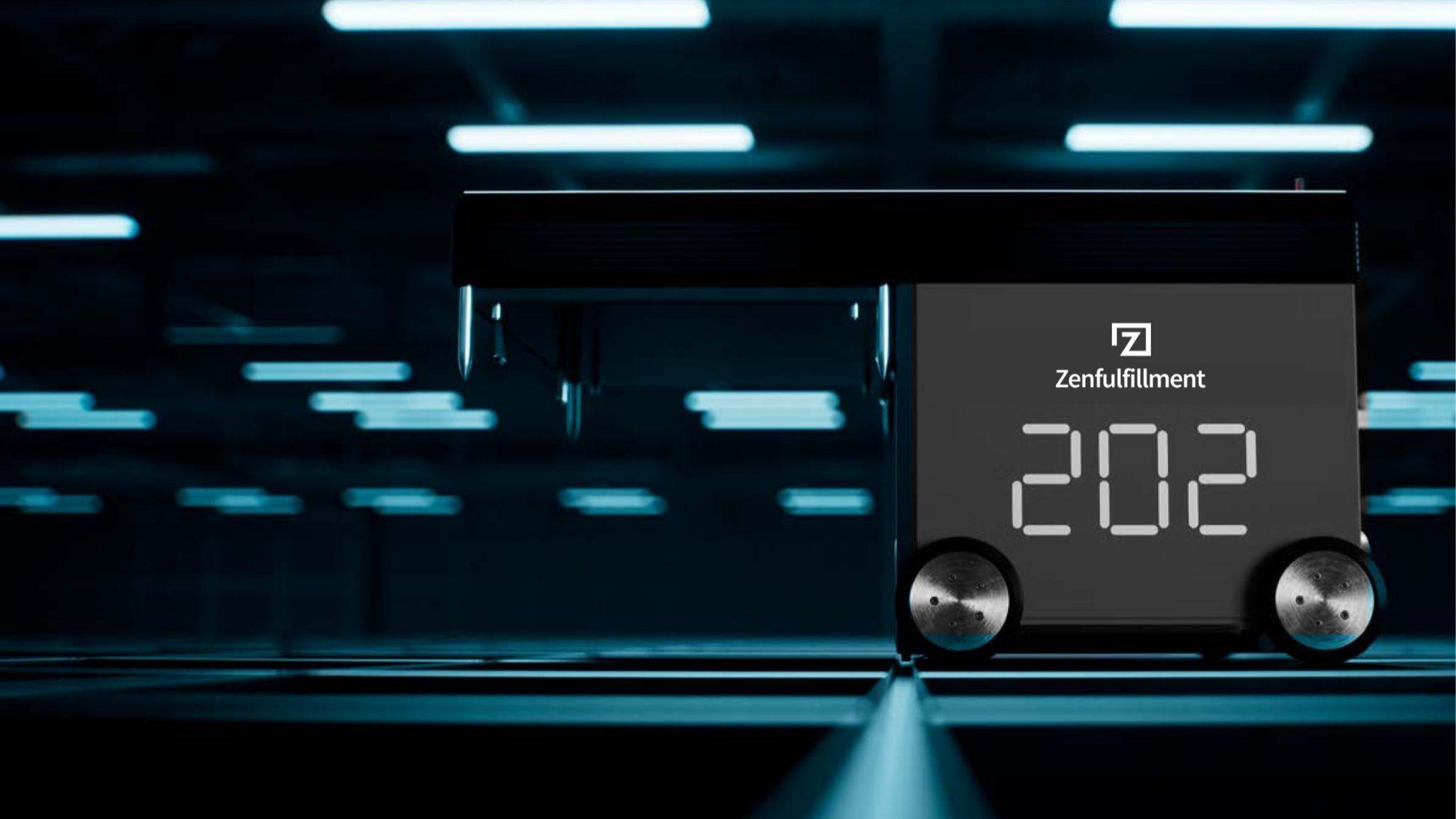
If you don't want to (or can't) pick yourself, a specialized fulfillment provider can take over the entire process:
💡 Advantage: You don't have to worry about staffing, warehouse layout, or process optimization — you can focus entirely on your core business.
Order picking is more than just an operational in-between step — it sets the pace for your entire fulfillment process. Mistakes here cost time, money, and trust. Well-structured, digitally supported pick processes, on the other hand, deliver:
Whether you store in-house or work with a fulfillment provider: with the right strategy and technology, picking becomes a competitive advantage.



.png)
