
We'll show you the package tracking solutions out there today and compare the tracking pages of the leading last-mile carriers!


Whether B2B shipping or a private order, package tracking is the standard today. Customers expect clarity about the status of their delivery at any time. Sellers and service providers who don't deliver on this risk trust and repeat business.
In this article, we'll show you in practical terms how package tracking works, what each provider offers — and how to make your shipping process more efficient.
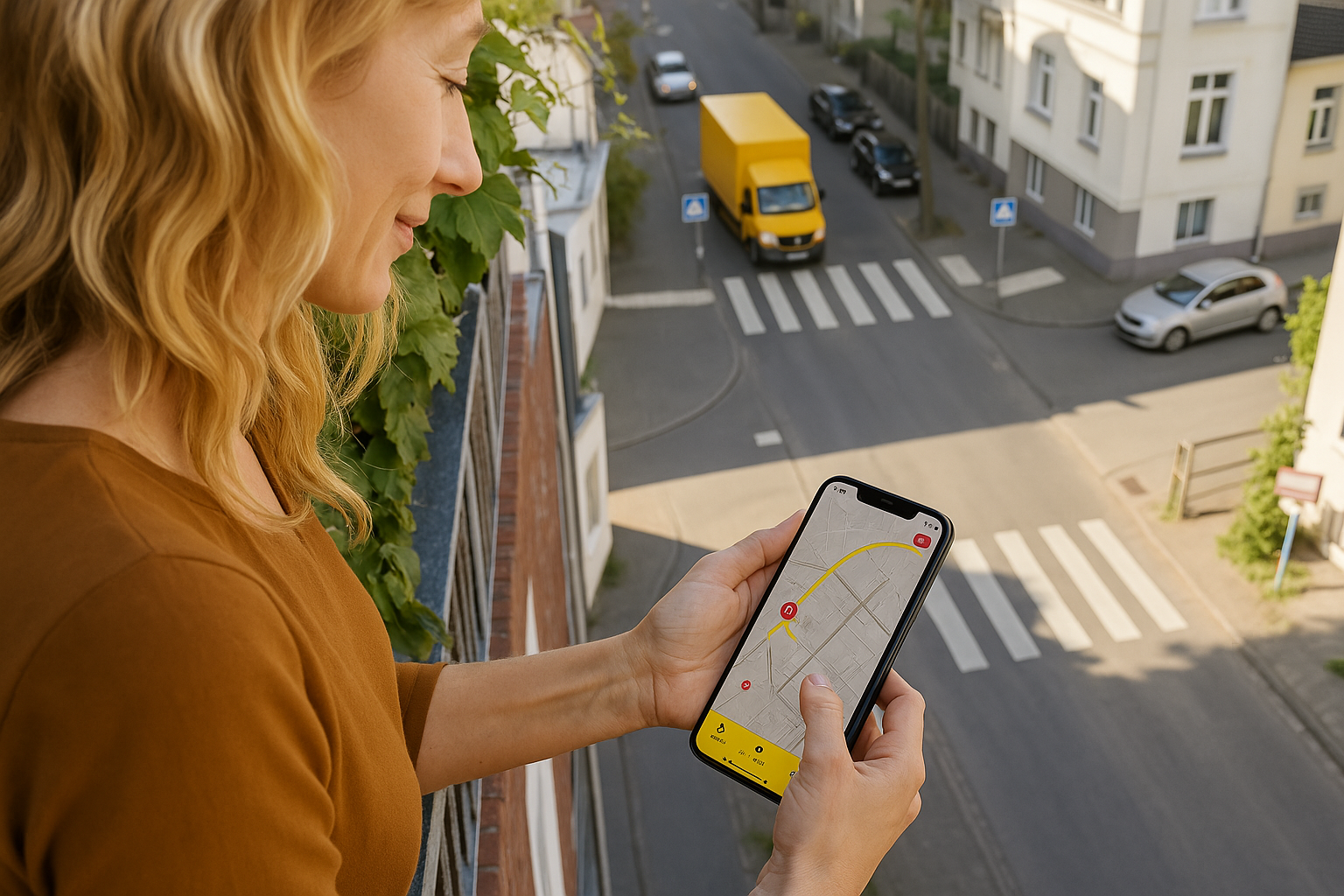
Package tracking — also called shipment tracking — describes the digital process of capturing a package across various stops and tracking it in real time. The goal: maximum transparency along the entire delivery chain.
How it works technically:
What it does for you:
Typical status messages:
Modern package tracking helps you increase customer satisfaction, take pressure off internal processes, and significantly reduce inquiries.
Every parcel service has its own tracking solution — technically they're similar, but they differ in the details. Here's an overview of the most common providers in German-speaking markets.
Pro:
High delivery speed, transparent status history. Ideal for standard B2C shipments and international deliveries via Deutsche Post.

Pro:
Modern real-time tracking — especially useful for time-critical delivery or high recipient frequency.

Pro:
Flexibility for end customers — especially in B2C with a high share of private customers.

Pro:
A reliable provider for B2B shipping in Europe with a stable price-performance ratio.
Pro:
Reliable shipment tracking with professional communication. Perfect for complex supply chain requirements.

Pro:
A seamless user experience — though limited to Amazon orders.
Bottom line for this section:
Your choice of carrier doesn't just affect delivery speed, it also affects the quality of communication with your customers. If you treat shipment tracking as part of the customer experience, you build trust and reduce support workload.
As soon as packages cross borders, tracking gets more complex. Different carriers, customs processes, and patchy data handovers can quickly create blind spots — a real pain point in cross-border E-Commerce.
Example:
A DHL parcel to Canada is taken over by Canada Post after the EU border. Depending on the data standard, status messages get delayed or are not transmitted at all.
Use platforms like 17track or Parcel Monitor to track shipments internationally — regardless of the carrier.
Communicate realistic delivery times for international orders, including possible delays from customs processing.
Make sure your customers have direct access to the status — ideally through an automated email or a customer portal.
A fulfillment provider with direct integrations to international carriers reduces friction in the tracking process.
International package tracking doesn't run itself. To stay in control, you need clear processes, the right tools, and reliable partners in the supply chain. That doesn't just improve delivery transparency, it also raises your service quality in global business.
Even with automated tracking systems, things don't always run smoothly. When the package status stagnates or isn't available at all, you need fast answers. Here are the most common problems — and concrete solutions:
Cause:
Solution:
Cause:
Solution:
Cause:
Solution:
Cause:
Solution:
Automated notifications by email or SMS dramatically reduce support inquiries. Systems like AfterShip or parcelLab integrate directly into existing shop systems.
Efficient tracking doesn't end with the system status — it starts with clear processes, fast response paths, and transparent communication. That way you avoid customer frustration and lower internal support costs.
Standard tracking often isn't enough — especially if you manage many shipments daily or handle international orders. Here are the tools and systems that help you keep an overview — centrally, automated, and scalable.

Benefit:
A consistent customer experience — regardless of the carrier.

Benefit:
Quick access to status updates without system integration.

Benefit:
Customer proximity even with outsourced logistics processes.

Benefit:
With Zenfulfillment® you get a scalable logistics solution that intelligently links warehousing, shipping, returns, and tracking — all centrally controlled, with no manual work. That cuts effort and creates real transparency in your supply chain.
.png)
Package tracking tools create efficiency, transparency, and customer satisfaction — if they're properly integrated. If you treat shipping as part of the customer journey, you'll get measurable value from tracking optimization — and save resources in your day-to-day operations.
"Shipment tracking across all providers" refers to a central solution that lets you track packages from different logistics companies at the same time. Normally, customers or sellers have to enter the tracking number with the respective carrier, for example DHL, Hermes, DPD, or UPS. With a central solution, all data is consolidated in one interface, so you don't need to open individual portals.
Technically, this works through interfaces to the carriers' systems. Every package gets a unique tracking number when handed over, and that number is updated at every scan along the delivery chain. This information is queried and consolidated by the central platform. The user just enters the tracking number, and the software automatically detects which provider it belongs to. That way, all shipments can be displayed in a single dashboard and tracked in real time.
In short: "Shipment tracking across all providers" means that packages from different logistics companies can be tracked in a single central interface, making the process more efficient, more transparent, and more convenient.
Yes, with international package tracking, shipments outside Europe can usually be tracked without issue. The basis for this is the global cooperation between logistics companies through so-called tracking interfaces. As soon as a package is handed over, it's given a unique tracking number that can be used across providers. If the shipment changes logistics partner during transit, for example moving from a European to a non-European delivery system, the number is generally carried over or linked to a reference number.
That way, shipments to North America, Asia, Africa, or South America can be tracked too. Data quality, however, depends on each partner network. While large international carriers like DHL, UPS, or FedEx provide very detailed status messages, smaller local providers sometimes deliver less detailed or delayed information.
Modern central tracking solutions smooth out these differences by combining information from multiple systems and presenting it in a single interface.
A central shipment tracking solution across all providers brings significant benefits for both end customers and sellers. The biggest benefit is clarity. Instead of entering each tracking number separately on the websites of DHL, Hermes, UPS, or DPD, all packages can be monitored in a single interface. That saves time and reduces complexity, especially when several orders are in transit at the same time.
Beyond that, a central solution offers real-time transparency. Users can see immediately which logistics company has the package, which station it last passed through, and when delivery is planned. Many platforms also offer notifications by email or app, so updates aren't missed.
For sellers, central shipment tracking also means better customer communication. Instead of relying on the systems of logistics partners, sellers can proactively pass on status updates and take pressure off customer service. As a result, the number of inquiries about delivery times drops significantly.
The frequency of data updates in international package tracking depends on each logistics company and its technical interfaces. Generally, the status of a shipment is updated whenever it reaches a new station in the delivery chain. That includes, for example, acceptance at the fulfillment center, processing in a sorting center, departure or import into the destination country, and handover to the local delivery service.
With major global providers like DHL, UPS, or FedEx, updates usually happen several times a day and almost in real time, as soon as a scan is registered in the system. With smaller regional providers, status messages may only be transmitted once a day or even with some delay.
Central tracking solutions partly compensate for these differences by combining data from multiple systems and presenting it as up-to-date as possible. Still, the rule is: the more digitalized and connected the carrier, the more reliable the updates.
Yes, it's possible to track several packages from different logistics companies at the same time. This is done via central tracking solutions that consolidate information from various carriers and present it in a single user interface. Instead of tracking each package separately at DHL, Hermes, UPS, DPD, or FedEx, you simply enter the relevant tracking numbers in one central system.
Technically this works because the software automatically detects which provider the entered number belongs to. The data is then retrieved through interfaces and synced in real time. That way, all packages can be monitored on a single platform regardless of the carrier. This is particularly useful for online sellers shipping many orders in parallel, but also for end customers expecting multiple deliveries from different shops.
Another benefit is the overview. Users can see immediately where their packages are, which stations they've already passed through, and when delivery is expected. Many systems also offer the option to enable notifications, so you're automatically informed when the status of a delivery changes.
Bottom line: with central tracking solutions, several packages from different logistics companies can be tracked at the same time, saving time and making it much easier to keep an overview.
To start shipment tracking with all providers, the main thing you need is the tracking number. This unique identifier is assigned by every logistics company as soon as a package enters the system. It's printed on the shipping label and is usually provided to the sender and recipient by email or in the order confirmation.
In some cases, additional information can also be helpful. That includes the recipient's postal code, the seller's reference number, or an order number stored in the online shop's system. For international shipments, customs or reference numbers can also be relevant for tracking the package even when the logistics partner changes.
Central tracking solutions usually only need the tracking number. Based on its format, the system automatically detects which provider it belongs to and pulls the relevant data. That way, you can also monitor multiple shipments from different carriers in parallel.
Yes, there are clear differences between domestic and international package tracking. Within a country, shipment tracking is usually very precise and almost real-time. Major logistics companies like DHL, Hermes, or DPD scan packages at every station, from the sorting center all the way to delivery. That lets customers and sellers see at any time where the shipment is and when it's expected to arrive.
With international package tracking, the process is more complex. As soon as a package crosses the border, it often changes logistics partners. While a German carrier handles shipping up to the airport or border, a different provider takes over in the destination country. The original tracking number usually remains valid, but in some cases is supplemented with a new reference number. Transmitting data between systems can cause delays, which is why international tracking information often appears less detailed or arrives late.
The level of digitalization of the involved logistics companies also plays a role. While large international carriers deliver very precise data, smaller regional providers often work with less automated processes.
The safety of your data is an important aspect when using a central shipment tracking solution. Generally, only a small amount of information is needed to track a package, in most cases just the tracking number. This number doesn't contain sensitive personal data and only serves to identify the shipment in the logistics company's system.
Modern tracking platforms operate in line with common data protection regulations like the GDPR and rely on encrypted connections to secure data access. That prevents third parties from intercepting or misusing the transmitted information. Many systems also store tracking data only temporarily, so no permanent collection of customer data is created.
It's also important to note that central tracking services generally don't intervene in the shipping processes themselves. They simply access the data of logistics companies via interfaces and present it together. Personal data like name, address, or payment information isn't visible to them.
International package tracking shows a series of typical status messages that make a shipment's path from handover to delivery transparent. One of the first messages is "Shipment electronically pre-advised." That means the seller has transmitted the shipping data to the logistics provider but the package hasn't physically been handed over yet.
As soon as the package arrives at the fulfillment center or drop-off point, the message "Shipment accepted" appears. After that, status messages like "Shipment sorted" or "At export hub" track the progress through various distribution centers. At border crossing, you'll often see "Shipment has left the export country" or "Shipment has arrived at import hub."
In the destination country, a partner provider takes over, which is when the message "Shipment is being processed in the destination country" appears. Finally, status messages like "Shipment is out for delivery" and "Shipment delivered" mark the end of the transport chain.
It can occasionally happen that shipment tracking doesn't show current data. This can have multiple causes and isn't unusual, especially with international shipments. Often the package hasn't been scanned for a longer period, for example during transport in a plane or on a ship. In such cases an update only happens once the next station is reached.
Another reason can be a change in logistics partner. As soon as a package reaches the destination country, another carrier often takes over. Until the systems are synchronized, there can be delays in the display of status messages. Technical issues or temporary outages of tracking systems can also lead to information not being available right away.
As a recipient, it's worth waiting a few hours or one to two days first, since many systems work with a time lag. If the issue persists, it's a good idea to contact the seller or carrier directly. With the tracking number, both can quickly check where the shipment is.



.png)
