Returns are a key part of your entire supply chain. Here's a step-by-step guide to lowering your return rate and turning the returns experience into a highlight of your customer service.


First, let's look at the product description and the key details that make for great copy.
Implementation: Build a list of the 5–7 most important features of your product. Use precise, descriptive terms and avoid jargon. Highlight the key features in bullet points.
The FlexiFit Sport T-Shirt is the perfect partner for any athletic activity – designed to combine performance, comfort, and style. Built for active people who value quality and functionality, the FlexiFit T-Shirt adapts to every movement and supports peak performance. Whether you're jogging, at the gym, or out on outdoor activities, FlexiFit gives you the support you need.
The FlexiFit Sport T-Shirt is more than just a piece of clothing – it stands behind your active lifestyle. It pairs innovative technology with eco-friendly manufacturing to deliver a product that's both high-performing and sustainable. Experience the difference with FlexiFit – where style and performance meet.
Integrate 360-degree image software on your product page. Make sure images are high-resolution and show the product in full.

Pick AR-capable platforms for your e-commerce site. Let customers place products virtually in their own environment.

Returns are unavoidable in online retail. They aren't always tied to your products — usually customers are simply dissatisfied or the product doesn't fit the intended use. That's why clean returns management is essential to your success.
Implementation: Set up an easily accessible online returns portal, including an FAQ page that answers common questions about returns.
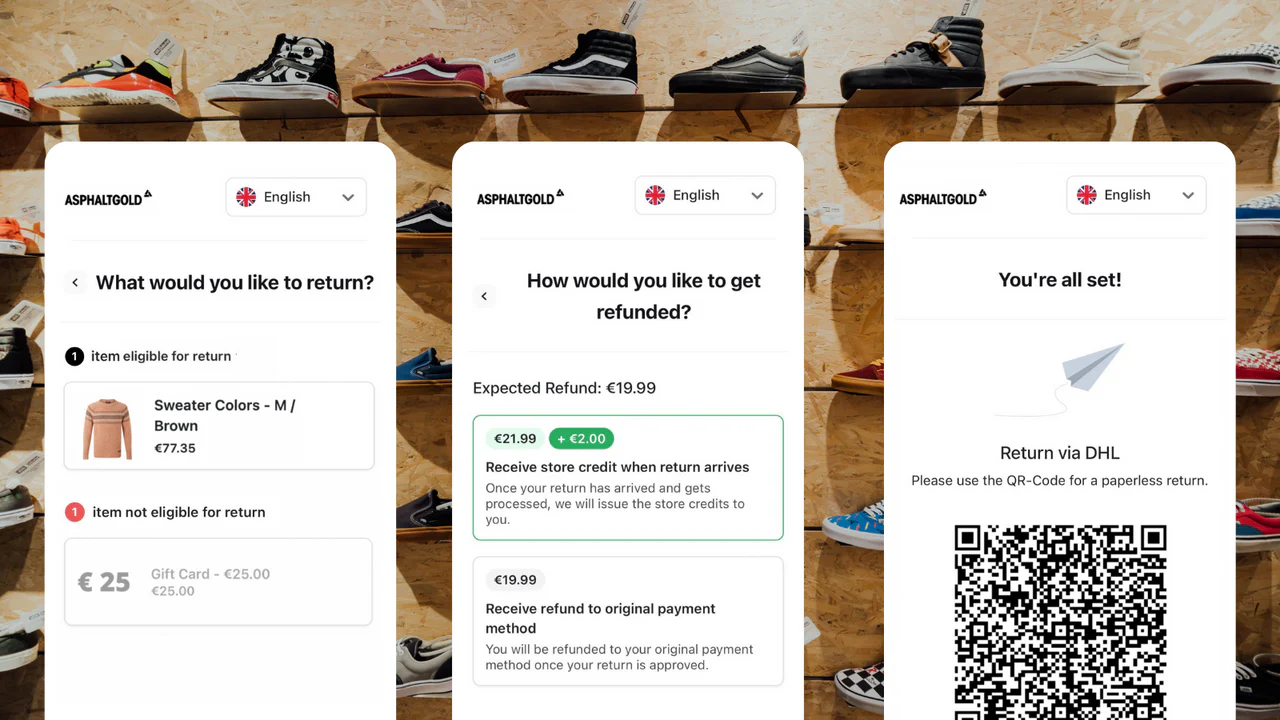
Provide multiple return channels — for example return by mail, drop-off at a store, or via parcel shops — and communicate them clearly. Start with the most popular providers for handling returns. Over time, you'll build a regular customer base and community you can ask directly about their preferred return options.
Here are a few examples of customer-friendly returns management:
Zalando – At Zalando, customers can return items free of charge by mail, drop them off at a parcel shop, or even use a pickup service. Zalando communicates these options clearly on their website and during checkout.
H&M – H&M lets customers return online purchases by mail, drop them off in any H&M store, or send them back via a Hermes parcel shop. These options are clearly shown on the website and in the returns FAQ.
Implement a system that lets customers create return labels instantly and on their own through your online portal. Typically, you cover the cost upfront or settle accounts in batches. In some cases the count isn't on the label itself but on the parcel-shop drop-off, billed at fixed intervals.
Introduce a quality-check checklist for every delivery. Each product must be inspected before entering inventory. That way you spot defective or substandard goods early — before they ever reach the end customer.
Schedule semi-annual supplier audits to inspect production sites and review quality-assurance processes.
Use software to analyze customer reviews, identify quality gaps, and trigger improvement actions — for example an email asking for feedback.
Include a simple feedback request with every package that customers can fill out online to explain their reasons for returning.
Use analytics tools to evaluate return data, identify patterns, and take preventive action.
Schedule monthly meetings across customer service, product management, and quality assurance to discuss return causes and improvement opportunities.
By combining technological innovation, customer-focused service, and quality management, e-commerce businesses can effectively lower their return rate and create a positive shopping experience that strengthens customer loyalty.




.png)
